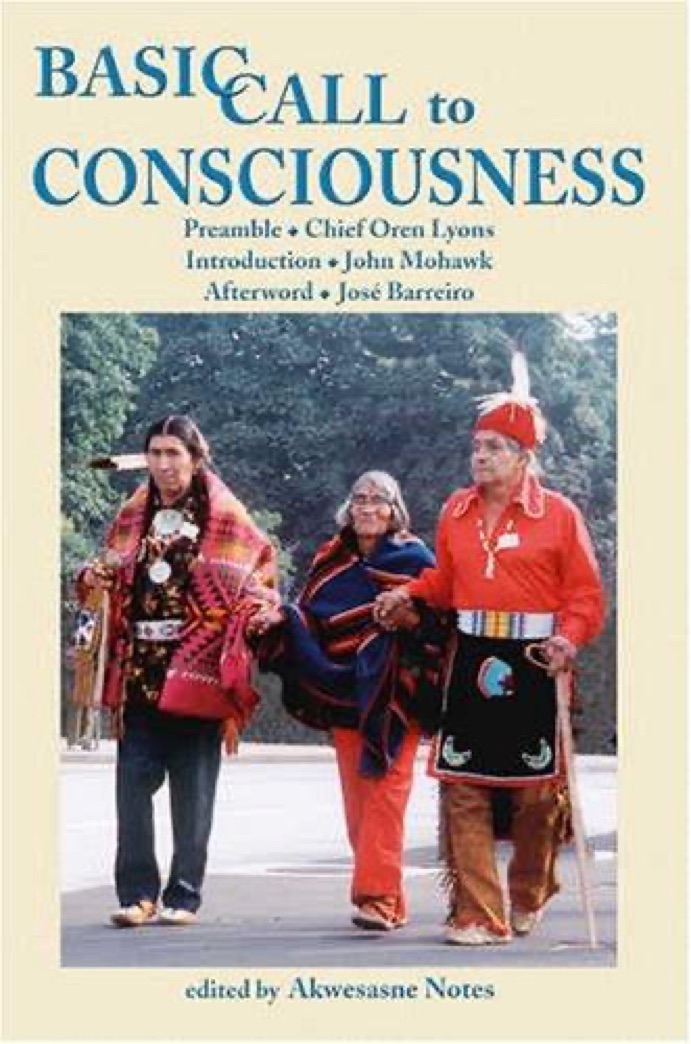
A Basic Call to Consciousness
Applying the lessons from "A Basic Call to Consciousness" by Akwesasne Notes to your life can be a transformative exercise in reassessing your relationship with success, legacy, and the natural world. Here are some ways you might integrate these lessons:
-
Implement Seven-Generation Thinking: - In your ventures within healthcare and venture capital, move beyond quarterly returns and five-year exits to consider how your investments will affect the health and well-being of the world 150 years from now. By prioritizing long-term ecological and social stability over immediate gain, you build a legacy that is truly sustainable.
-
Adopt a Stewardship Mindset: - Whether you are managing a medical practice or leading a legal team, view your authority and resources as something you hold in trust rather than something you own. This shift from ownership to stewardship fosters a culture of responsibility and humility, ensuring that you leave every organization and environment better than you found it.
-
Align with Natural Law: - Just as aviation requires a strict adherence to the physical laws of aerodynamics, your leadership should align with the biological and social laws of balance. Recognize the limits of growth and the necessity of rest and renewal, avoiding the "auto-destructive" path of burnout and resource depletion in your personal and professional life.
-
Maintain Personal Sovereignty: - Emulate the Haudenosaunee’s refusal to be defined by external powers by staying rooted in your own core values and identity. In a world that often demands conformity to corporate or institutional norms, maintaining your intellectual and spiritual independence allows you to lead with authentic integrity.
-
Integrate Ethics into Every Action: - View every business deal and medical decision through a lens of interconnectedness. Ask yourself how a specific choice impacts not just the bottom line, but the broader community and the environment, recognizing that true success is impossible if it comes at the expense of the systems that sustain life.
-
Value Wisdom over Information: - As a lifelong learner, differentiate between technical knowledge and deep wisdom. While staying "hungry" for data and innovation is important, use the "humility" of the Indigenous perspective to ensure that your technological advancements serve human and planetary health rather than merely increasing complexity.
By integrating these lessons, you move beyond the traditional metrics of Western achievement toward a more holistic definition of success that honors the Earth, your community, and the future. This approach ensures that your work as an entrepreneur and physician contributes to a global "call to consciousness" that values life above all else.
What the book covers
"A Basic Call to Consciousness" by Akwesasne Notes is a seminal manifesto of Indigenous political and spiritual thought, originally compiled from the Haudenosaunee (Iroquois) Confederacy’s 1977 presentations to the United Nations in Geneva. The book serves as a profound critique of Western industrial civilization, arguing that the modern world is on a path of self-destruction due to its disconnect from natural law. It presents an alternative worldview rooted in the Great Law of Peace, advocating for a way of life that prioritizes ecological stewardship and the rights of future generations over material accumulation.
Summary:
-
The Haudenosaunee Delegation to Geneva: - In 1977, leaders of the Haudenosaunee traveled to Switzerland on their own sovereign passports to address the United Nations, refusing to acknowledge the authority of the United States or Canada over their nations. Their mission was to present a series of position papers that asserted Indigenous sovereignty and provided a global warning about the environmental and spiritual state of the world.
-
The Address to the Western World: - This core section of the book offers a scathing critique of Western history, characterizing it as a series of "liberation" movements that merely replaced one form of oppression with another. The authors argue that European-derived cultures are technologically sophisticated but spiritually underdeveloped, having traded a relationship with the living Earth for a devotion to dead commodities.
-
The Supremacy of Natural Law: - The text asserts that all human-made laws are ultimately subordinate to Natural Law, which governs the universe. The Haudenosaunee explain that true consciousness begins with the recognition that humans are not masters of the Earth but a small part of a complex, interconnected web of life that requires constant respect and gratitude.
-
Critique of the Industrial Way of Life: - The book argues that industrial society is inherently predatory and "auto-destructive" because it views the natural world as a resource to be extracted rather than a relative to be protected. This mindset leads to the poisoning of the biosphere and the eventual collapse of the systems that sustain human life.
-
Spiritualism as a Political Tool: - The authors posit that spirituality is not a private matter but a foundational political principle for Indigenous people. By grounding governance in the "Great Law of Peace," they demonstrate a system that has maintained social harmony and environmental balance for centuries, offering it as a model for global survival.
-
The Seventh Generation Principle: - A recurring theme is the obligation of current leaders to consider the impact of their actions on the seventh generation of children yet to be born. This long-term thinking is presented as the only viable way to ensure the continuity of life, contrasting sharply with the short-term profit motives of modern capitalism.
This book remains a vital document because it shifted the global discourse on Indigenous rights from a focus on civil rights within existing states to a broader conversation about the survival of the planet. Its call for a return to consciousness—recognizing our place within the natural world—continues to inspire environmental activists and leaders seeking a more sustainable and ethical path forward.