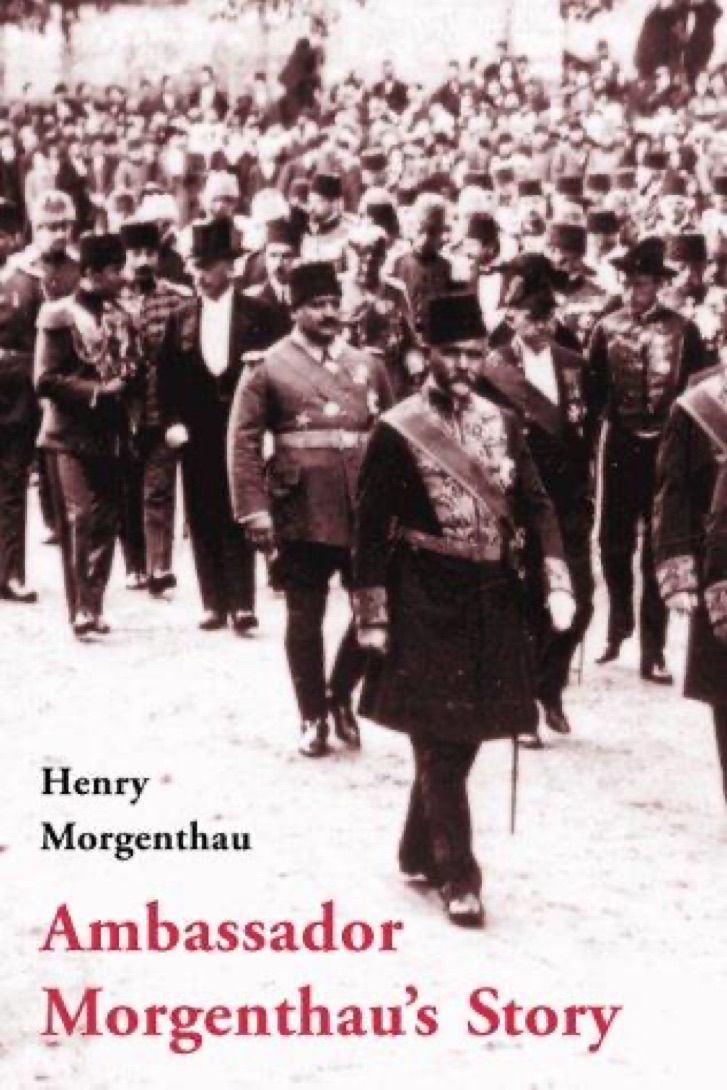
Ambassador Morgenthau's Story
Applying the lessons from "Ambassador Morgenthau's Story" by Henry Morgenthau to your life can be a profound exercise in understanding the intersection of ethics, power, and the courage to witness. Here are some ways you might integrate these lessons:
-
Exercise Moral Courage in Leadership: - In your professional life, whether in the ER or the boardroom, you will encounter situations where the "official line" contradicts the reality you see with your own eyes. Like Morgenthau, you must have the integrity to call out systemic failures or ethical breaches, even when doing so is unpopular or complicates your strategic objectives. True leadership is defined by what you refuse to tolerate.
-
Recognize the Anatomy of Systemic Failure: - The book illustrates how small shifts in policy and the erosion of checks and balances can lead to catastrophic outcomes. You should apply this lens to organizations, whether in healthcare or venture capital, by identifying early warning signs of toxic culture or autocratic decision-making. Preventing a crisis requires the ability to see the endgame while others are still focused on the immediate tactical gains.
-
Value Direct Observation Over Filtered Data: - Morgenthau’s impact came from his refusal to accept the Ottoman government's sanitized reports. In business and medicine, you must seek primary sources and "go to the floor." Do not rely solely on dashboards or middle-management summaries; your best decisions will come from the raw, unfiltered reality of the situation.
-
Navigate High-Stakes Diplomacy with Emotional Intelligence: - The author’s interactions with Enver and Talaat show the importance of understanding the psychology of your counterparts. In high-stakes negotiations, you must look beyond the stated arguments to understand the underlying motivations and fears of the people across the table, allowing you to advocate more effectively for your position.
-
The Responsibility of the Global Citizen: - For someone with a background in law and international business, this book serves as a reminder that professional roles often carry humanitarian obligations. You should consider how your influence can be used to support those without a voice, recognizing that your status provides a platform for advocacy that others lack.
-
Acknowledge the Limits of Neutrality: - There are times when "staying neutral" is a form of complicity. In your career, you must decide which lines are non-negotiable. Morgenthau eventually realized that his diplomatic neutrality was a barrier to his moral duty, a lesson that applies to any leader facing a fundamental ethical crossroads.
By integrating these lessons, you can cultivate a leadership style that is both strategically savvy and morally grounded, ensuring that your pursuits in entrepreneurship and medicine are always aligned with a higher standard of human decency and truth. Being "Hungry and Humble" requires the appetite for truth and the humility to accept that your greatest responsibility is often to something larger than your own success.
What the book covers
"Ambassador Morgenthau's Story" by Henry Morgenthau is a seminal first-hand account of the author’s tenure as the United States Ambassador to the Ottoman Empire from 1913 to 1916. The narrative provides a chilling and detailed record of the diplomatic maneuvering preceding World War I and the subsequent systematic atrocities committed by the Ottoman authorities against the Armenian population. Morgenthau’s observations offer a rare, high-level perspective on the geopolitical shifts that reshaped the Middle East and the moral failures that led to one of the twentieth century's greatest human tragedies.
Summary:
-
The Rise of the Young Turks: - Morgenthau details the inner workings of the Committee of Union and Progress, led by the triumvirate of Enver Pasha, Talaat Pasha, and Djemal Pasha. He describes how these leaders transitioned from revolutionary reformers to autocratic rulers who centralized power and steered the empire toward a radical nationalist ideology.
-
The German Influence and Diplomatic Maneuvering: - A significant portion of the book examines the influence of the German Empire, particularly through Ambassador Wangenheim. Morgenthau explains how Germany strategically manipulated Ottoman leadership to join the Central Powers, using the arrival of the warships Goeben and Breslau to effectively force the empire into the conflict against the Allies.
-
The Closing of the Dardanelles and the Gallipoli Campaign: - The author provides a ringside seat to the strategic closing of the Dardanelles, which isolated Russia and altered the course of the war. He recounts the tensions in Constantinople during the Allied naval attacks and the subsequent Gallipoli campaign, noting the shift from Ottoman panic to a renewed, dangerous confidence following their defensive success.
-
The Systematic Extermination of the Armenians: - The heart of the memoir is Morgenthau’s documentation of the Armenian Genocide. He provides harrowing evidence that the "deportations" were a thinly veiled campaign of state-sponsored extermination, involving forced marches, starvation, and mass murder. He refutes Ottoman claims of Armenian rebellion, identifying the actions as a deliberate policy of ethnic cleansing.
-
The Confrontation with Talaat and Enver: - Morgenthau recounts his personal meetings with Ottoman leaders, where he attempted to intervene on behalf of the Armenians and foreign nationals. These dialogues reveal the chilling indifference of Talaat Pasha, who viewed the destruction of an entire race as a necessary political "solution" and frequently challenged the right of a neutral ambassador to interfere in domestic affairs.
-
The Role of Foreign Missions and Relief Efforts: - The book highlights the desperate efforts of American missionaries, doctors, and relief workers who remained in the empire to provide aid. Morgenthau describes the logistical and political hurdles involved in distributing humanitarian support while facing constant threats and surveillance from the Ottoman secret police.
-
The Collapse of Diplomacy and Departure: - As the United States drew closer to entering the war, Morgenthau details the breakdown of diplomatic norms and the increasing hostility toward foreign influence. He reflects on his decision to resign and return to America to sound the alarm about the atrocities, realizing that quiet diplomacy had reached its limit in the face of absolute tyranny.
This memoir remains a vital historical document, serving as a primary source that validates the Armenian Genocide through the eyes of a neutral but deeply moral witness. It stands as a powerful testament to the necessity of international oversight and the enduring responsibility of diplomats to report the truth, even when it complicates national interests.