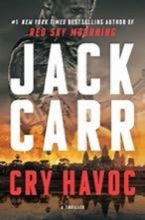
Cry Havoc
Applying the lessons from "Cry Havoc" by Jack Carr to your life can be a powerful way to understand how legacy, preparation, and ethical clarity define a professional and personal trajectory. Here are some ways you might integrate these lessons:
- Cultivate a Multi-Generational Legacy: - You should view your current professional achievements—whether in medicine, law, or business—as the foundation for a legacy that outlasts your active career. Just as Tom Reece’s actions in 1968 shaped his son’s future, your commitment to "Stay Hungry, Stay Humble" sets a standard for your family and mentees, requiring you to act with the long-term impact of your decisions in mind.
- Master the Basics of Your Craft: - In an age of high-tech solutions, you must remain grounded in the fundamental skills of your trade, whether that is the physical diagnosis in the ER or the basic tenets of a legal contract. The book highlights how Tom Reece’s survival depended on tactical fundamentals; similarly, your success as a pilot or entrepreneur depends on your mastery of the "analog" basics before you rely on digital tools or venture capital leverage.
- Maintain Ethical Clarity Amidst Chaos: - When navigating complex business landscapes or high-pressure medical environments, you must develop a personal moral compass that functions independently of external chaos. By observing how Tom Reece navigates institutional betrayal, you can learn to identify "mission drift" in your own organizations and have the courage to realign with your core values even when it is unpopular.
- Build Resilience through Shared Hardship: - You should prioritize the development of high-trust teams where the bond is forged through shared challenges and mutual respect. In both the startup world and the healthcare setting, the strength of your "brotherhood" or "sisterhood" determines your group's ability to survive systemic failures, suggesting that you should invest more in culture and people than in processes.
- Anticipate the Long-Term Consequences of Compromise: - You must recognize that small ethical or operational compromises today can manifest as catastrophic failures years down the line. By analyzing the "butterfly effect" of the conspiracies in the book, you can become a more discerning venture capitalist and leader, looking beyond short-term gains to evaluate the long-term health and integrity of your investments and initiatives.
By integrating these lessons, you ensure that your diverse roles as a physician, pilot, and entrepreneur are united by a consistent warrior spirit that values truth over convenience and impact over recognition.
What the book covers
"Cry Havoc" by Jack Carr is a visceral prequel to the Terminal List series that transports readers back to the height of the Vietnam War in 1968. Eschewing the modern technological landscape of James Reece’s world, the novel explores the origins of the Reece warrior bloodline through the eyes of his father, Tom Reece. It serves as both a standalone historical thriller and a foundational piece of lore that explains the tactical genius and moral framework that would eventually be inherited by the series' original protagonist.
Summary:
- The Crucible of the Tet Offensive: - The narrative begins in the sweltering jungles of Vietnam during the 1968 Tet Offensive, a pivotal moment that redefined the American military experience. Tom Reece is depicted as a young, exceptionally capable operator who finds himself at the center of a conflict that is as much about internal politics as it is about external enemies.
- Specialized Warfare and SOG Operations: - As Tom transitions into clandestine operations, the book details the harrowing reality of "black ops" during the late 1960s. Carr meticulously researches the period-accurate weaponry, gear, and unconventional tactics used by SEALs and MACV-SOG units, highlighting the physical and psychological demands of operating behind enemy lines without official support.
- The Discovery of a Global Conspiracy: - While engaged in tactical maneuvers, Tom uncovers a web of corruption and betrayal that extends far beyond the Vietnamese theater. He realizes that high-level actors within the military-industrial complex are manipulating the war’s trajectory for profit and power, a revelation that forces him to question his allegiances and the true nature of his mission.
- Brotherhood and Sacrifice: - A significant portion of the book focuses on the bonds formed between Tom and his teammates, men who are forged in the fire of combat. These relationships illustrate the "warrior ethos" that Carr often discusses, emphasizing that loyalty to one's brothers-in-arms often supersedes loyalty to a flawed command structure.
- Developing the Hunter's Instinct: - The story tracks Tom’s evolution from a disciplined soldier to a lethal predator who understands the necessity of "crying havoc" when justice is subverted. This transformation is presented as a necessary response to the brutality of the era, providing the psychological blueprint for the Reece family’s future approach to conflict resolution.
- Historical Context and Geopolitical Fallout: - Carr weaves real-world historical figures and events into the fictional narrative, grounding the high-stakes action in the reality of the Cold War. The ending of the novel provides a bridge between the 1960s and the modern era, showing how the secrets Tom Reece uncovered in the jungle set the stage for the challenges his son would face decades later.
This novel is significant because it provides the essential "why" behind the "what" of the Terminal List universe, offering a deep dive into the historical forces that create modern heroes. By looking backward, Carr enriches the reader's understanding of the present, making the Reece legacy feel like a lived, multi-generational reality rather than a single-man mythos.