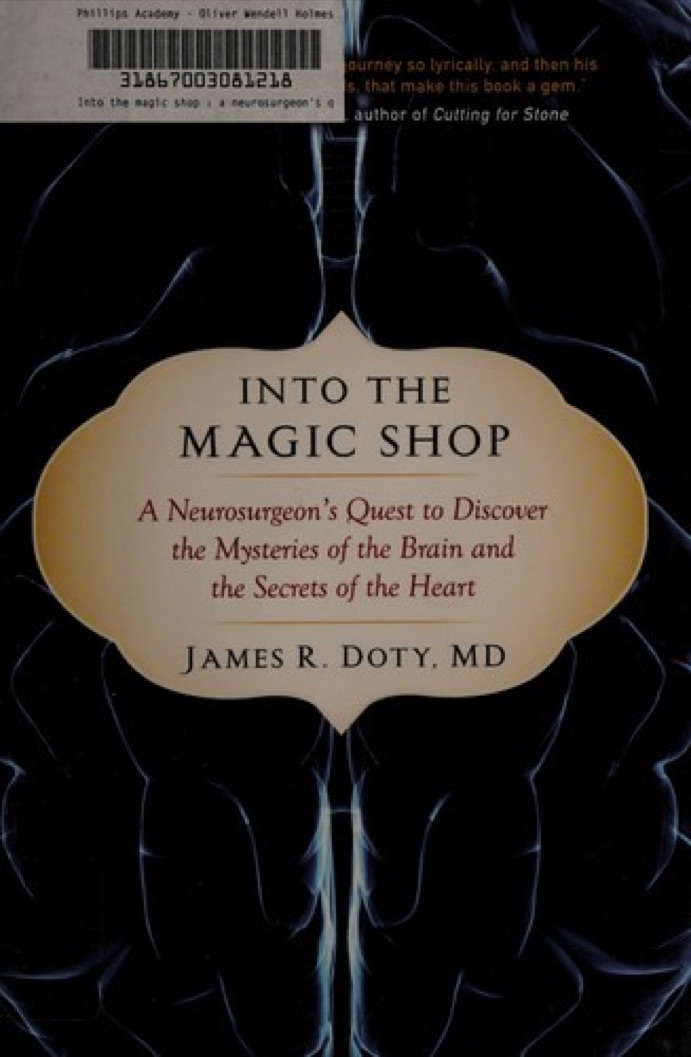
Into the Magic Shop: A Neurosurgeon's Quest to Discover the Mysteries of the Brain and the Secrets of the Heart
Applying the lessons from "Into the Magic Shop: A Neurosurgeon's Quest to Discover the Mysteries of the Brain and the Secrets of the Heart" by James R. Doty to your life can be a profound exercise in integrating high-level performance with deep emotional intelligence. Here are some ways you might integrate these lessons:
-
Master the Physiology of Performance: - Whether you are in the cockpit, the operating room, or a high-stakes negotiation, your biological state dictates your cognitive output. You can use Ruth’s techniques of systematic physical relaxation and rhythmic breathing to down-regulate your nervous system in real-time. By mastering your physiological response to stress, you ensure that your "prefrontal cortex" remains in control, allowing for precise decision-making even when the stakes are at their highest.
-
Practice Intentional Visualization for Goal Achievement: - Use the power of the brain’s "salience network" to move your ventures forward. By vividly visualizing your desired outcomes—be it the successful launch of a healthcare company or a complex legal victory—you prime your brain to recognize opportunities and signals that others might miss. This isn't just positive thinking; it is a neurological alignment of your subconscious resources with your conscious objectives.
-
Cultivate the "Open Heart" in Leadership: - Shift your leadership paradigm from one of pure clinical or business efficiency to one of radical compassion. In the high-pressure worlds of medicine and entrepreneurship, it is easy to view team members or patients as data points. By intentionally opening your heart and practicing empathy, you build a resilient culture that values the human element, which ultimately drives better long-term outcomes and personal satisfaction.
-
Silence the Inner Critic and Ego: - Recognize that the "monkey mind"—the voice of insecurity or ego-driven ambition—can be a distraction from your true purpose. Implement daily mindfulness practices to create a gap between stimulus and response. This mental space allows you to act from a place of "Stay Hungry, Stay Humble," ensuring your actions are driven by genuine intent rather than a need for external validation.
-
Define Legacy Through Altruistic Contribution: - Re-evaluate your metrics for success to include the positive impact you have on the lives of others. True resilience comes from realizing that your worth is not defined by your titles, your JD, your MBA, or your bank account. By focusing on how your multi-disciplinary skills can serve the vulnerable—much like Doty’s work with CCARE—you create a legacy that is both enduring and meaningful.
By integrating these lessons, you bridge the gap between the analytical precision of the brain and the intuitive wisdom of the heart. This synthesis not only enhances your capabilities as a pilot, physician, and entrepreneur but also ensures that your lifelong pursuit of learning and growth is anchored in a foundation of compassion and inner peace.
What the book covers
"Into the Magic Shop: A Neurosurgeon's Quest to Discover the Mysteries of the Brain and the Secrets of the Heart" by James R. Doty is a transformative memoir that bridges the gap between the clinical world of neurosurgery and the profound impact of mindfulness and compassion. It follows the author's journey from a childhood defined by poverty and neglect to his eventual success as a world-renowned physician and researcher. Through a narrative that is both scientific and deeply spiritual, the book explores how the synergy between the brain and the heart can unlock human potential and heal personal trauma.
Summary:
-
The Magic Shop Encounter: - At age twelve, James Doty stumbles into a magic shop in Lancaster, California, where he meets a woman named Ruth. Sensing the boy's internal struggle with an alcoholic father and a chronically depressed mother, Ruth offers to teach him a unique form of "magic" over the summer that has nothing to do with card tricks and everything to do with the mind. - Ruth’s lessons center on what she calls "taming the mind," providing the young Doty with the tools to change his internal dialogue and envision a future beyond the limitations of his current environment. This encounter serves as the pivotal moment that alters the trajectory of his entire life.
-
Relaxing the Body and Taming the Mind: - The first phase of Ruth's teaching involves systematic muscle relaxation to counteract the body's "fight or flight" response. Doty learns that by physically calming his body, he can lower his stress levels and create the mental space necessary for clear thinking. - He then moves on to "taming the monkey mind," a meditation technique designed to quiet the constant, often negative, internal chatter. This discipline allows him to focus with a level of intensity that eventually enables his academic success and his ability to master the rigors of medical school.
-
Opening the Heart: - Ruth emphasizes that the mind is a powerful tool, but it is dangerous if not connected to the heart. She teaches Doty to cultivate compassion—both for himself and for others—explaining that an "open heart" is the only way to find true fulfillment. - This lesson proves the most difficult for Doty to integrate, as his early survival instincts had led him to build emotional walls. Ruth warns him that manifesting his desires without compassion would ultimately leave him feeling empty, a prediction that proves prophetic in his adult years.
-
Clarifying Intent and Visualization: - The final part of the training involves visualization, where Doty is taught to focus intensely on his goals until they become a psychological reality. He uses this technique to see himself as a doctor long before he has the means to achieve it. - While these techniques help him achieve professional heights, Doty reflects on how his younger self focused more on the ego-driven desires of the brain—wealth and status—rather than the heart-centered wisdom Ruth had tried to instill.
-
The High-Stakes World of Neurosurgery: - Doty provides a gripping look into the operating room, where his training in focus and calm is tested daily. He shares instances where his ability to remain centered allowed him to perform life-saving maneuvers under extreme pressure. - He also illustrates the fallibility of surgeons, admitting to moments of arrogance and the hard lessons he learned when clinical success was not matched by personal humility or empathetic patient care.
-
The Loss of Everything and the Power of Altruism: - After amassing a fortune as a medical entrepreneur, Doty loses nearly $75 million during the dot-com crash. This financial ruin forces him to revisit Ruth’s lessons and realize that his identity had become too tied to his net worth. - He makes the radical decision to fulfill a massive charitable pledge despite his losses, an act of altruism that leads to a profound sense of peace. This choice eventually leads to the founding of the Center for Compassion and Altruism Research and Education (CCARE) at Stanford, which explores the scientific benefits of a compassionate life.
This book is a powerful testament to neuroplasticity and the human spirit's ability to overcome adversity. By combining the narrative of a high-achieving medical career with the practice of mindfulness, Doty provides a roadmap for living a life that is both professionally successful and emotionally resonant.