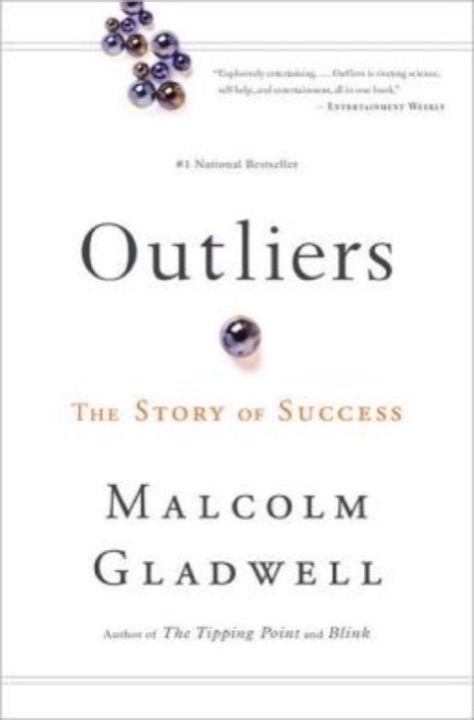
Outliers: The Story of Success
It seems there might be a misunderstanding, as there is no known book titled "Oulliwea" by Malcolm Gladwell. However, if you're interested in applying lessons from Malcolm Gladwell's other works, I can help with that. Gladwell's books often explore themes of success, decision-making, and social dynamics. Here are some general lessons from his works and how you might apply them to your life:
-
The Tipping Point: Understand the power of small changes and how they can lead to significant impacts. In your life, consider how small, consistent actions can lead to meaningful changes over time.
-
Blink: Trust your instincts and the power of quick decision-making. Given your experience in emergency situations, you likely already apply this by relying on your intuition and experience to make rapid, effective decisions.
-
Outliers: Recognize the importance of practice and opportunity in achieving success. Reflect on how your past experiences and opportunities have shaped your achievements, and continue to seek out new opportunities for growth.
-
David and Goliath: Embrace challenges and disadvantages as potential sources of strength. Your resilience and ability to overcome adversity align well with this lesson, so continue to view obstacles as opportunities for growth.
-
Talking to Strangers: Approach interactions with empathy and an open mind. Your values of kindness and understanding align with this lesson, so continue to strive for meaningful connections with others.
If you have a specific aspect of your life you'd like to focus on, I can help tailor these lessons further.
What the book covers
"Outliers: The Story of Success" by Malcolm Gladwell is a compelling exploration into the various factors that contribute to high levels of individual achievement. Gladwell argues that the traditional narrative of the "self-made" person is largely a myth, suggesting instead that success is the product of hidden advantages and extraordinary opportunities. By examining the lives of tech giants, professional athletes, and world-class musicians, the book illustrates how timing, culture, and upbringing are often more decisive than raw talent or ambition.
Summary:
-
The Matthew Effect and Cumulative Advantage: - Gladwell introduces the concept of cumulative advantage, where small early leads result in significant long-term disparities in achievement. He illustrates this using Canadian junior hockey players, discovering that a disproportionate number are born in the first three months of the year because the age-class cutoff date provides them with a physical maturity advantage that leads to better coaching and more practice time.
-
The 10,000-Hour Rule for Mastery: - The author posits that achieving world-class expertise in any complex task requires approximately 10,000 hours of deliberate practice. Through case studies of the Beatles’ grueling residency in Hamburg and Bill Gates’s unprecedented access to a computer terminal in 1968, Gladwell demonstrates that what we perceive as innate talent is often the result of an extraordinary opportunity to work harder than everyone else.
-
Demographic Luck and Historical Timing: - Success is frequently a matter of being born at the right historical moment to capitalize on specific economic or technological shifts. Gladwell examines the birth years of the wealthiest people in history and Silicon Valley pioneers, showing that specific windows of opportunity—such as the dawn of the personal computer revolution—favored those born in a narrow five-year span who were the perfect age to lead the industry.
-
The Trouble with Geniuses: - High IQ is only a predictor of success up to a certain point, a "threshold" beyond which additional intelligence does not provide a significant real-world advantage. By comparing the life of Chris Langan, who has one of the highest IQs ever recorded but struggled professionally, with the successful career of Robert Oppenheimer, Gladwell highlights how "practical intelligence" and social savvy often outweigh raw cognitive ability.
-
Cultural Legacies and Communication: - Our cultural heritage and the traditions of our ancestors play a hidden role in our professional performance and safety. Gladwell explores how the "culture of honor" in the American South affects behavioral responses to conflict and how the hierarchical nature of certain cultures contributed to a series of airline crashes, eventually being solved by training pilots to use more assertive communication styles.
-
Rice Paddies and Mathematical Proficiency: - The book links the grueling work ethic required for traditional rice farming in Asia to the modern-day mathematical prowess of students from those regions. Gladwell argues that the cultural legacy of persistence and the belief that effort leads to reward provides a significant educational advantage that is often mistaken for purely biological or innate cognitive differences.
-
The KIPP Academy and Structural Reform: - Using the success of the KIPP (Knowledge Is Power Program) schools, Gladwell argues that the achievement gap can be closed by adjusting the traditional American school calendar to better suit students from disadvantaged backgrounds. By extending school hours and eliminating the "summer slide," these institutions provide the extra time and structure necessary for students to reach their full potential regardless of their home environment.
The significance of "Outliers" lies in its fundamental challenge to the American ideal of meritocracy. By refocusing the conversation on external systems, cultural heritage, and the luck of birth, Gladwell encourages readers and policymakers to reconsider how society can create more equitable opportunities for everyone to succeed rather than waiting for talent to emerge on its own.