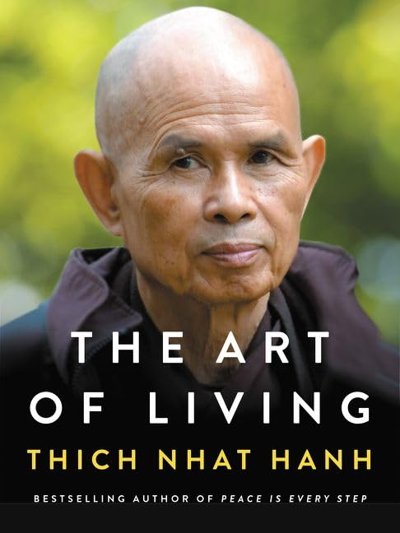
The Art of Living: Peace and Freedom in the Here and Now
Applying the lessons from "The Art of Living: Peace and Freedom in the Here and Now" by Thich Nhat Hanh to your life can be a powerful catalyst for achieving a balanced state of high-performance and deep tranquility. Here are some ways you might integrate these lessons:
- Presence in High-Stakes Environments: - In the emergency room or the cockpit, anchor yourself in the present moment to ensure decisions are made with absolute clarity. By practicing mindfulness, you prevent the adrenaline of a crisis from clouding your judgment, ensuring you are fully available for the person in front of you.
- Interconnected Leadership and Management: - View your organizations as ecosystems of "interbeing" where the well-being of every staff member directly affects the health of the entire firm. Recognizing that your success is tied to the team helps you lead with empathy rather than ego, increasing collective resilience across your healthcare ventures.
- Strategic Aimlessness in Goal Pursuit: - Integrate "aimlessness" by focusing on the quality of the professional journey rather than just the exit strategy. By detaching from obsessive outcome-tracking, you lead with more creativity and purpose, which often results in superior performance because your actions aren't driven by the anxiety of the future.
- Resilience through the Lens of Impermanence: - Use the insight of impermanence to navigate market volatility and legal shifts with a steady hand. Understanding that both triumphs and setbacks are temporary allows you to maintain an even keel, preventing burnout during lean periods and staying humble during times of rapid growth.
- Compassionate Communication in Law and Medicine: - Whether negotiating contracts or speaking with patients, apply the concentration on non-self to listen without the filter of your ego. Removing the "sign" of your authority creates a space of authentic connection, facilitating better outcomes and building deeper trust with clients and colleagues.
- The Discipline of Letting Go of Identity: - Practice letting go of your professional titles and academic accolades to find your true value beyond your resume. Realizing that your worth isn't tied to your latest venture or degree grants you the freedom to take bolder risks and live with a more profound sense of personal liberty.
By integrating these lessons, you transform your diverse professional pursuits from a series of exhausting hurdles into a unified practice of mindful living. This approach enhances your capacity as a leader and healer, and ensures that your drive to "stay hungry" is always balanced by the peace of being humble and present in every moment of your life.
What the book covers
"The Art of Living: Peace and Freedom in the Here and Now" by Thich Nhat Hanh is a spiritual manual that distills the Zen master’s final teachings into seven key concentrations for achieving true happiness and liberation. The book provides a profound look at how we can transcend our fundamental fears of death, loss, and loneliness by changing our perception of reality and our place within it. By focusing on the revolutionary concept of "interbeing," Hanh guides readers through a meditative journey that reveals the interconnected nature of all things, offering a practical path to transform suffering into compassion. Through these teachings, the book serves as a guide for navigating the complexities of modern existence by grounding the reader in the power of the present moment.
Summary:
- The Insight of Interbeing: - Hanh introduces the concept of interbeing, which posits that nothing can exist by itself alone; everything must "inter-be" with everything else. This foundational principle challenges the Western notion of a separate self, suggesting that we are made entirely of non-self elements like our ancestors, the sun, the environment, and the society around us. - By understanding interbeing, you can dissolve the walls of isolation and realize that your happiness is inextricably linked to the well-being of others. This realization fosters deep compassion and fundamentally changes how you interact with every person and object you encounter in your daily life.
- The Concentration on Emptiness: - Emptiness, in this context, does not mean non-existence but rather being "empty of a separate self." Hanh explains that a flower is empty of a separate self but full of the cosmos, including the rain and the soil; similarly, humans are a collection of causes and conditions. - Applying this concentration allows you to see the presence of the entire universe in a single moment or object. This shift in perspective helps to alleviate the fear of death and the anxiety of being alone, as you realize you are a continuous manifestation of life in all its diverse forms.
- The Wisdom of Signlessness: - Signlessness refers to the understanding that the outer appearances or "signs" of things—like birth, death, coming, and going—do not represent their true essence. Hanh uses the analogy of a cloud that doesn't "die" but transforms into rain or snow, suggesting that our essence is similarly fluid. - When you look beyond signs, you see that you and your loved ones are in a constant state of transformation rather than an eventual ending. This insight provides a profound sense of peace regarding the cycle of life and the inevitability of physical change.
- The Power of Aimlessness: - Aimlessness, or apranihita, is the practice of not putting anything in front of you to chase, such as fame or future success. Hanh argues that we spend our lives running after goals, thinking happiness is at the finish line, which prevents us from living in the only time available: the here and now. - By practicing aimlessness, you learn to find fulfillment in the process rather than the outcome. This does not mean being passive, but rather acting with total presence and joy without becoming a slave to future expectations or the pressure of achievement.
- Impermanence and the Present Moment: - Hanh emphasizes that impermanence is what makes life possible; without change, a seed could never become a tree and a child could never grow. However, suffering arises not from impermanence itself, but from our mental attachment to things being permanent and unchanging. - Embracing impermanence encourages you to cherish the present moment and the people in it. It acts as a bell of mindfulness, reminding you to live deeply and love fully while you have the opportunity, rather than waiting for a "better" time in the future.
- Letting Go and Non-Craving: - This concentration involves identifying the objects of your craving—the things you think you absolutely need to be happy—and realizing that they may actually be obstacles to your freedom. Hanh teaches that true freedom comes from the ability to let go of these restrictive mental attachments. - Letting go is an active practice of release that creates space for peace and joy to enter. It involves recognizing that many of our "requirements" for happiness are actually burdens that prevent us from experiencing the simplicity and beauty of the present.
- The Realization of Nirvana: - Nirvana is described not as a place to go after death, but as the "extinction of notions" and the coolness of freedom that is available right now. It is the state of being where we have successfully removed the wrong views and perceptions that cause us to suffer. - By practicing the previous concentrations, you reach a state of Nirvana where you are no longer overwhelmed by fear, anger, or despair. You enter a realm of ultimate reality where peace is the ground you walk on and every breath is an expression of freedom.
"The Art of Living" serves as a definitive guide to mindfulness, offering a roadmap for anyone seeking to reconcile the demands of modern high-stakes life with deep spiritual peace. Hanh’s teachings suggest that by changing our inner landscape, we can effectively contribute to a more compassionate and harmonious world, proving that true peace begins with the individual's realization of their own interconnected nature.