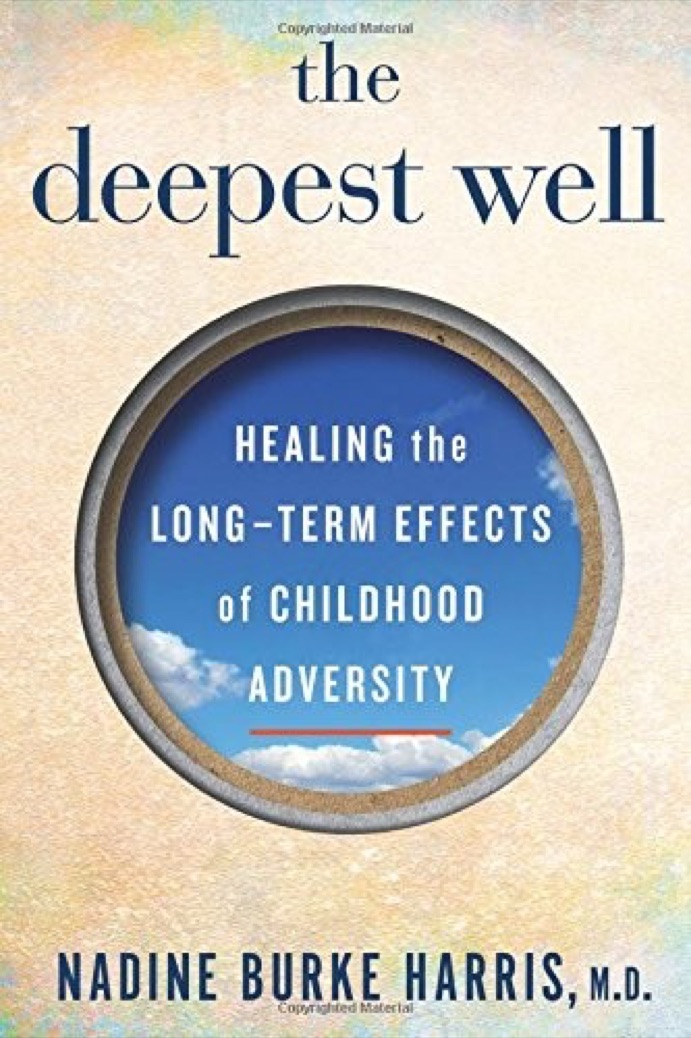
The Deepest Well: Healing the Long-Term Effects of Childhood Adversity
Applying the lessons from "The Deepest Well: Healing the Long-Term Effects of Childhood Adversity" by Nadine Burke Harris to your life can be a transformative step toward holistic health and high-performance leadership. Here are some ways you might integrate these lessons:
- Shift the Diagnostic Perspective: - In your clinical and legal work, transition from asking "What is wrong with this person?" to "What happened to this person?" Recognizing that chronic illness or behavioral issues may be symptoms of a dysregulated stress response allows you to treat the root cause rather than just the manifestations.
- Utilize Quantitative Bio-Markers: - Just as you use data to drive decisions in venture capital and entrepreneurship, use tools like the ACE score to quantify the impact of past experiences. This objective measurement can help you better understand your own resilience and the potential vulnerabilities of those you lead or treat.
- Prioritize Biological Regulation: - As a pilot and emergency physician, you operate in high-stress environments where a calm nervous system is essential. Implement Harris’s "six pillars"—specifically mindfulness and sleep—not as luxuries, but as critical tools to prevent your own stress response from becoming toxic or impairing your decision-making.
- Focus on Upstream Solutions: - In your role as a healthcare entrepreneur and VC leader, look for opportunities to invest in "upstream" interventions. Investing in early-life resilience and trauma-informed care can yield massive long-term dividends in public health and economic productivity compared to treating end-stage chronic diseases.
- Foster Psychological Safety: - In leadership and family life, understand that your presence can serve as a "buffer." Healthy, supportive relationships are the most powerful antidote to toxic stress; by creating a safe environment for your team and family, you are literally protecting their long-term biological health.
- Advocate for Systemic Change: - Use your multifaceted background in law and medicine to champion public health policies that integrate ACE screening. Recognizing the universal nature of childhood adversity allows you to lead the charge in making trauma-informed care a standard of practice across all socioeconomic tiers.
By integrating these lessons, you can develop a more empathetic and effective approach to medicine and leadership while ensuring your own biological resilience remains robust throughout your various high-stakes pursuits.
What the book covers
"The Deepest Well: Healing the Long-Term Effects of Childhood Adversity" by Nadine Burke Harris is a profound exploration of the biological link between childhood trauma and adult health. Drawing on her experience as a pediatrician and her role as California’s first Surgeon General, Harris explains how "toxic stress" fundamentally alters the developing brain and body. The book functions as a medical detective story, tracking the discovery of the Adverse Childhood Experiences (ACE) study and its implications for modern medicine. It ultimately provides a roadmap for healing, advocating for a shift in how society perceives and treats the long-term impact of early-life adversity.
Summary:
- The Discovery of the ACE Study: - Harris introduces the landmark 1998 study by Dr. Vincent Felitti and Dr. Robert Anda, which revealed a direct correlation between ten categories of childhood adversity and the leading causes of death in adults. She explains how this data provided a missing link in her own clinical practice, where she saw children in San Francisco’s Bayview neighborhood suffering from physical ailments that were deeply rooted in their environments.
- The Mechanism of Toxic Stress: - The book details the science of the HPA axis (hypothalamic-pituitary-adrenal axis) and how a constantly activated stress response becomes toxic. Harris clarifies that while the "fight-or-flight" response is life-saving in the short term, its chronic activation in childhood can lead to permanent changes in brain structure and immune function.
- Epigenetics and Genetic Expression: - A central argument involves epigenetics, showing that childhood trauma can actually change how genes are expressed. Harris describes how stress can lead to chemical "tags" on DNA that can be passed down through generations, effectively pre-programming a child’s biological response to their environment before they are even born.
- The Impact on Long-Term Health: - Harris illustrates how high ACE scores significantly increase the risk of heart disease, cancer, autoimmune disorders, and even shortened telomeres. She emphasizes that these outcomes are not merely the result of "bad lifestyle choices" like smoking or drug use, but are the direct result of biological changes triggered by early trauma.
- Screening and Clinical Intervention: - The author recounts her efforts to implement universal ACE screening in her clinic, despite initial pushback from the medical community. She argues that knowing a patient’s ACE score is as vital as knowing their blood pressure or cholesterol levels, as it allows for targeted interventions that address the root cause of systemic inflammation.
- The Six Pillars of Healing: - Harris outlines a specific protocol for dampening the toxic stress response and promoting resilience. This multidisciplinary approach focuses on sleep, exercise, nutrition, mindfulness, mental health support, and healthy relationships, which collectively work to rebalance the body's overactive stress response system.
This work is a crucial contribution to public health, reframing childhood trauma as a biological crisis rather than a social or moral failure. By bridging the gap between neuroscience and clinical practice, Harris empowers both providers and patients to pursue healing through a deeper understanding of the body’s internal response to external adversity.