The Immortal Life of Henrietta Lacks
Applying the lessons from "The Immortal Life of Henrietta Lacks" by Rebecca Skloot to your life can be a transformative exercise in aligning professional excellence with profound human empathy. Here are some ways you might integrate these lessons:
- Prioritize Patient-Centered Ethics: As a leader in healthcare entrepreneurship and venture capital, you must ensure that innovation never outpaces the fundamental right to dignity. Whether you are scaling a telehealth platform like MeMD or managing an emergency department, you should implement standards for transparency and informed consent that go beyond legal minimums to honor the "human" behind the data. - You can champion a culture where every patient is treated as an individual with a unique story, ensuring that your investment decisions at Xcellerant Ventures prioritize ethical integrity as much as commercial viability and technical disruption.
- Address Healthcare Inequity Systemically: The book highlights the devastating consequences of systemic bias, a reality you have worked to mitigate through your leadership at Tribal Health. You should continue to advocate for underserved communities, ensuring that the fruits of medical innovation are accessible to those whose ancestors might have been the subjects of that research without benefit. - By focusing on equitable care delivery, you help break the cycle of medical mistrust and ensure that your mantra of "Stay Humble" is reflected in a commitment to bridging the gap between cutting-edge technology and basic healthcare access for all populations.
- Navigate the Intersection of Law and Medicine: With your background as both an attorney and a physician, you are uniquely positioned to bridge clinical necessity and legal protection. Use this dual perspective to advocate for policies that protect individual genetic privacy while still fostering the open collaboration necessary for scientific advancement. - Your legal acumen can help create frameworks for "fair share" models in biotech, where the contributions of individuals to large-scale research are recognized and protected in a way that aligns with modern property and privacy rights.
- Humanize Data Through Storytelling: As an author and pilot, you know that technical precision must be paired with narrative clarity to be effective. You can integrate this by humanizing the metrics in your businesses, reminding your teams that behind every "user" in an application or "patient" in a clinical trial is a family and a story similar to Henrietta's. - Making this human connection central to your leadership helps prevent the clinical detachment that can lead to ethical lapses and fosters a more compassionate, high-performing organizational culture that stays "Hungry" for truth.
- Lead with Legacy in Mind: Just as Henrietta’s cells had a life of their own, the systems and cultures you build in your ventures will outlast your direct involvement. Focus on building "immortal" values rather than just profitable enterprises, ensuring that organizations like NextCare maintain their commitment to patient welfare long after they scale or transition. - By embedding these ethical principles into the DNA of your startups, you ensure that your professional legacy as a serial entrepreneur is one of not only immense success but also profound respect for the humanity of every individual your businesses touch.
By integrating these lessons, you can harmonize your diverse roles as a physician, attorney, and entrepreneur into a cohesive mission of ethical leadership. Standing at the vanguard of healthcare transformation, your commitment to being both "Hungry" for progress and "Humble" before the human stories that fuel it will ensure that your impact is as enduring and beneficial as the science you seek to advance.
What the book covers
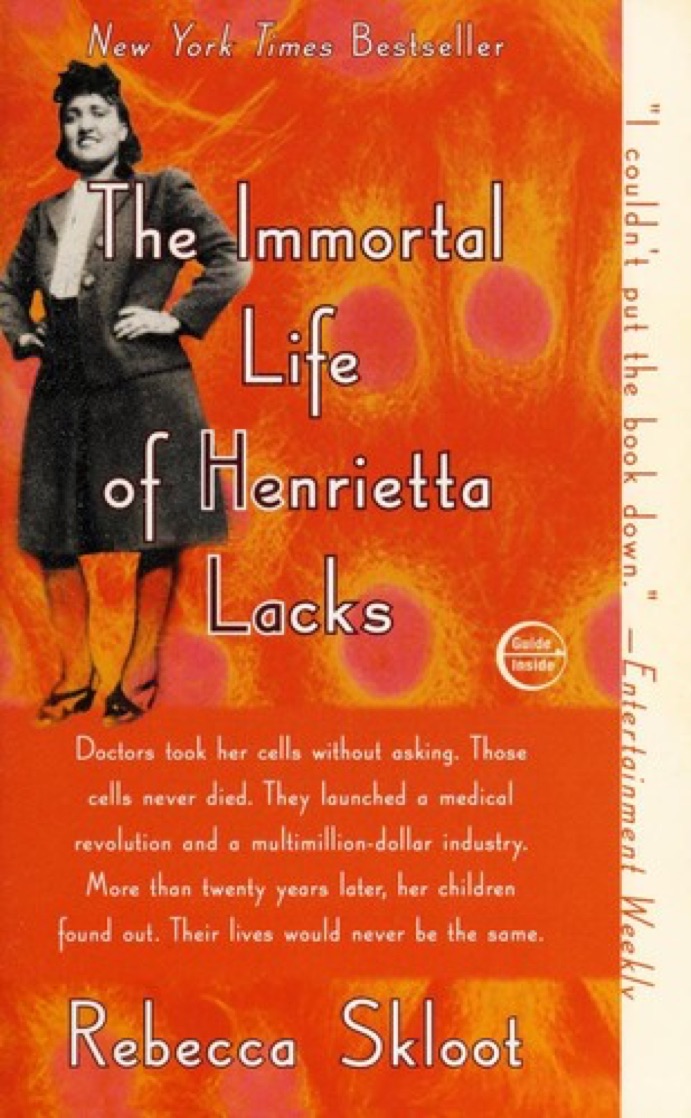
"The Immortal Life of Henrietta Lacks" by Rebecca Skloot is a masterful blend of biography, science, and investigative journalism that uncovers the hidden history of the woman behind the world's first "immortal" human cell line. The book weaves together the life of Henrietta Lacks, a Black tobacco farmer who died of cervical cancer in 1951, with the staggering scientific breakthroughs enabled by her cells, known as HeLa. Through years of research and a deep bond with Henrietta’s daughter, Deborah, Skloot explores the ethical, racial, and legal questions surrounding the commercialization of human tissue and the impact of medical exploitation on a single family.
Summary:
- The Diagnosis and the Sample: In 1951, Henrietta Lacks visited the "colored" ward of Johns Hopkins Hospital due to a "knot" in her womb. Before beginning radiation treatment for her cervical cancer, a surgeon cut tissue samples from her without her knowledge or consent, passing them to Dr. George Gey, a researcher who had been trying for decades to grow human cells in a laboratory environment. - Unlike every other sample Gey had tested, Henrietta’s cells doubled in number every 24 hours. This unprecedented "immortality" gave scientists a reliable supply of human cells to experiment on for the first time, effectively launching the field of modern cellular biology and changing the trajectory of medicine forever.
- The Proliferation of HeLa: While Henrietta succumbed to her cancer just months after her diagnosis, her cells lived on and were distributed to laboratories across the globe. Dr. Gey initially gave the cells away for free to further science, but they soon became the bedrock of massive medical advancements and a multi-billion dollar industry. - HeLa cells were instrumental in developing the polio vaccine, mapping the human genome, and creating treatments for leukemia, influenza, and Parkinson’s disease. They were even sent into space to study the effects of zero gravity on human tissue, all while the Lacks family remained entirely unaware of Henrietta's global biological legacy.
- The Family's Discovery: For decades, Henrietta’s descendants knew nothing of HeLa's existence until researchers contacted them in the 1970s for blood samples to resolve a cell contamination crisis. The revelation was deeply traumatic for the family, who were shocked to learn that Henrietta’s cells were being bought and sold by the trillions while many of her own children lived in poverty without basic healthcare. - This discovery sparked a generational cycle of distrust toward the medical establishment. The family struggled to reconcile the immense public good their mother’s cells provided with the private pain of her exploitation and the lack of transparency they experienced from the institutions that profited from her.
- Ethics and the Legal Landscape: Skloot delves into the legal murkiness of 20th-century medicine, where informed consent was virtually non-existent for marginalized patients. She contrasts Henrietta's case with legal precedents like the John Moore case, which later ruled that individuals do not have a right to the profits made from their discarded tissues. - The narrative highlights how systemic racism and classism allowed a woman's body to be harvested for parts without her family receiving recognition or compensation. It serves as a critique of a system that prioritized scientific progress over the fundamental rights and dignity of the individual patient.
- The Quest for Henrietta: A significant portion of the book focuses on Skloot’s ten-year journey to earn the trust of Henrietta’s daughter, Deborah. Together, they visited laboratories and archives to piece together Henrietta’s personality and medical history, humanizing the "HeLa" acronym that had previously been treated as a mere laboratory tool. - This collaborative effort transformed Henrietta back into a vibrant, beloved woman. By uncovering her personal story, Skloot ensured that the "mother of modern medicine" would no longer be an anonymous donor but a recognized historical figure whose humanity was finally restored to the science she fueled.
- Accountability and Lasting Impact: The book's publication led to a public reckoning within institutions like Johns Hopkins and the NIH, resulting in more stringent oversight regarding genetic privacy. While the HeLa line remains a cornerstone of research today, the Lacks family now has a voice in how their mother’s genetic information is used. - The legacy of Henrietta Lacks has prompted ongoing global discussions about medical ethics, patient rights, and the necessity of acknowledging the human sources of scientific data. The book ensures that future progress is built on a foundation of mutual respect, transparency, and equity.
"The Immortal Life of Henrietta Lacks" serves as a powerful reminder of the human cost of scientific achievement and the vital importance of empathy in medicine. It bridges the gap between cold clinical data and the lived experiences of those who serve as its foundation. By blending rigorous science with a compassionate family portrait, Skloot forces a reconsideration of the relationship between patients and providers, ultimately demanding a future where progress and dignity are no longer mutually exclusive.