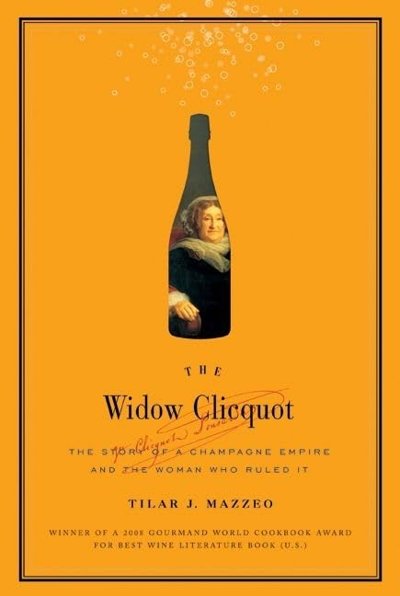
The Widow Clicquot: The Story of a Champagne Empire and the Woman Who Ruled It
Applying the lessons from "The Widow Clicquot: The Story of a Champagne Empire and the Woman Who Ruled It" by Tilar J. Mazzeo to your life can be a transformative exercise in building resilience and fostering a culture of high-stakes innovation. Here are some ways you might integrate these lessons:
-
Embrace Calculated Audacity: - Just as Barbe-Nicole risked her personal fortune to break through naval blockades, you must be willing to take bold, calculated risks when the market presents a narrow window of opportunity. Whether in a clinical setting or a venture capital deal, identify the moments where the potential for a "first-mover advantage" outweighs the safety of the status quo.
-
Solve Technical Bottlenecks with Creative Engineering: - The invention of the riddling table proves that the biggest obstacles in your industry are often just technical problems waiting for a creative solution. Look for the "sediment" in your current workflows—whether in telehealth delivery or emergency room protocols—and design the proprietary systems necessary to clear the path for a superior product or patient experience.
-
Leverage the Power of Personal Branding: - Barbe-Nicole understood that her identity as the "Widow" was her most valuable asset; she turned a potential social liability into a mark of distinction. You should curate your professional narrative across law, medicine, and entrepreneurship to ensure that your personal brand conveys a consistent message of quality, reliability, and expertise.
-
Maintain Quality Control Through Expansion: - As you scale your ventures, from urgent care centers to investment portfolios, never sacrifice the core quality that established your reputation. Implementing rigorous standards, much like the Widow’s obsessive focus on the clarity of her wine, ensures that growth does not lead to brand dilution or a decline in excellence.
-
Find Opportunity in Global Instability: - The Napoleonic Wars were a period of catastrophe for many, but Barbe-Nicole viewed the shifting geopolitical landscape as a series of openings for market expansion. Cultivate a mindset that looks past immediate crises to identify how macro-level shifts—be they in healthcare legislation or economic cycles—can be leveraged to pivot and grow your organizations.
-
Foster a Legacy of Mentorship and Longevity: - Barbe-Nicole’s impact lasted because she thought in decades, not just fiscal quarters. In your roles as a leader and a pilot, focus on building sustainable systems and mentoring the next generation of "hungry and humble" professionals who can carry your vision forward long after you have stepped away from the cockpit.
By integrating these lessons, you can cultivate a leadership style that balances the meticulous precision of a scientist with the daring spirit of a pioneer, ensuring your professional empire remains as clear and enduring as a glass of vintage Clicquot.
What the book covers
"The Widow Clicquot: The Story of a Champagne Empire and the Woman Who Ruled It" by Tilar J. Mazzeo is a compelling historical biography that chronicles the life of Barbe-Nicole Clicquot Ponsardin, the visionary woman who built one of the world's most famous champagne houses. Set against the backdrop of the French Revolution and the Napoleonic Wars, the book explores how a young widow defied 19th-century social norms to transform a small family wine business into an international luxury brand. Mazzeo meticulously weaves together historical records and cultural context to illustrate the intersection of innovation, audacity, and business acumen.
Summary:
-
The Inheritance of a Fragile Legacy: - Born into a wealthy textile family in Reims, Barbe-Nicole married François Clicquot, whose family dabbled in the wine trade. After François’s untimely death in 1805, the twenty-seven-year-old Barbe-Nicole made the unprecedented decision to take over the struggling wine business rather than retire to a life of quiet widowhood, risking her entire inheritance to keep the venture afloat.
-
Navigating the Chaos of the Napoleonic Era: - The early years of the business were plagued by the constant upheaval of the Napoleonic Wars, which brought trade embargoes and economic instability across Europe. Barbe-Nicole demonstrated remarkable resilience, frequently maneuvering around naval blockades and navigating the complex politics of the era to ensure her products reached international markets, often through clandestine shipping routes.
-
The Breakthrough of Remuage (Riddling): - One of Barbe-Nicole’s most significant contributions to the wine industry was the invention of the "riddling" table, a process known as remuage. Before this innovation, champagne was cloudy due to yeast sediment; by tilting and turning the bottles, she discovered a way to collect and remove the sediment, resulting in the clear, crystal-bright champagne that became the industry standard and solidified her brand’s reputation for superior quality.
-
The Great Russian Gamble: - In 1814, as the Napoleonic Wars drew to a close, the Widow Clicquot executed a daring business move by smuggling thousands of bottles of her 1811 "Comet Vintage" to Russia ahead of her competitors. By being the first to break the blockade, she captured the Russian market, where the czar’s court developed an insatiable appetite for her champagne, effectively turning Veuve Clicquot into a global status symbol overnight.
-
Brand Identity and the Yellow Label: - Barbe-Nicole was a pioneer in branding, recognizing early on that the identity of the "Veuve" (Widow) was a powerful marketing tool that evoked both sympathy and respect. She meticulously guarded the quality of her product and later introduced the iconic yellow label, ensuring that her champagne was instantly recognizable in a crowded marketplace and creating a legacy of luxury that survives to this day.
-
A Legacy of Female Leadership: - Throughout her long life, Barbe-Nicole remained the "Grand Dame of Champagne," mentoring other women in the industry and maintaining control of her empire until her death. Her success was not merely a result of luck but of a relentless commitment to technical excellence and a willingness to embrace modern industrial techniques long before they were common in winemaking.
This biography is significant because it highlights a rare instance of female entrepreneurship during an era when women were largely excluded from the commercial sphere. Mazzeo’s work serves as both a history of a global luxury industry and a portrait of a woman whose grit and intellectual curiosity permanently altered the landscape of modern business.