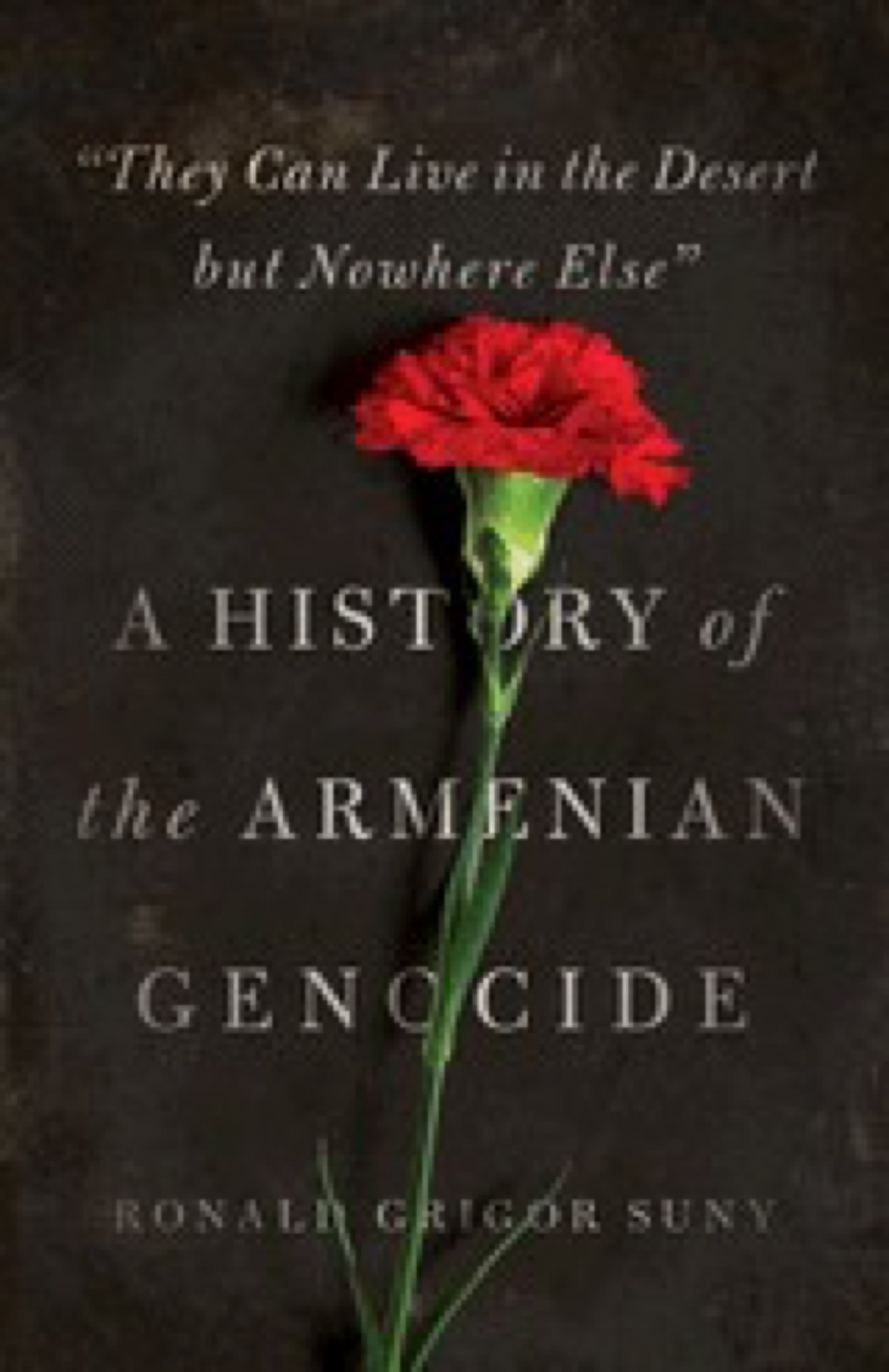
"They Can Live in the Desert but Nowhere Else": A History of the Armenian Genocide
Applying the lessons from "They Can Live in the Desert but Nowhere Else": A History of the Armenian Genocide by Ronald Grigor Suny to your life can be a sobering yet transformative exercise in developing a profound sense of ethical vigilance and global responsibility. Here are some ways you might integrate these lessons:
- Exercising Ethical Vigilance in Leadership: - In your roles as a healthcare executive and venture capitalist, you must recognize that radicalization and institutional failure often start with the subtle "othering" of groups. By maintaining a culture of inclusivity and transparency, you can prevent the creep of dehumanizing policies that prioritize organizational survival over human ethics.
- Protecting Professional Integrity in Medicine: - The history of the Armenian Genocide reveals the chilling role that professional classes, including physicians, can play in state-sponsored violence. You should use this as a reminder to remain fiercely loyal to the Hippocratic Oath, ensuring that medical knowledge is never used as a tool for discrimination or political engineering.
- Applying Aviation-Style Risk Assessment to Society: - Just as a pilot monitors instruments for early signs of a stall, you can apply situational awareness to recognize the warning signs of social or organizational collapse. Suny’s analysis of the Ottoman Empire’s descent into paranoia provides a framework for identifying "red flags" such as the suppression of dissent and the rise of nationalist rhetoric.
- The Role of the Legal Mind in Preserving Truth: - As an attorney, you understand that justice is impossible without an accurate factual record. Suny’s meticulous reconstruction of the genocide highlights the importance of documentation and the dangers of historical erasure; you should prioritize the preservation of truth in your businesses to ensure long-term accountability.
- Cultivating Resilience through Global Awareness: - Learning about the survival of the Armenian people can inform your perspective on personal and professional resilience. Recognizing the depths of past human suffering encourages a sense of humility and a drive to build systems—whether in telehealth or tribal health—that protect the vulnerable from systemic failure.
- Advocating for Justice in Entrepreneurial Ventures: - Your mantra "Stay Humble" can be applied to how you view your influence on the world stage. By investing in and leading companies that promote human rights and equitable access to resources, you actively work against the conditions of desperation and inequality that historically lead to conflict.
By integrating these lessons into your multifaceted career, you can help build a future that honors the victims of history by ensuring that the patterns of the past are recognized and actively disrupted. Suny’s scholarship serves as a call to action for every leader to use their influence as a shield for human dignity and a catalyst for a more just and empathetic world.
What the book covers
Ronald Grigor Suny’s "They Can Live in the Desert but Nowhere Else": A History of the Armenian Genocide provides a definitive, scholarly account of the first modern genocide of the twentieth century. Drawing on extensive archival research, Suny moves beyond simplistic narratives of religious conflict to examine the complex political, social, and nationalist motivations behind the Ottoman Empire’s systematic destruction of its Armenian population. The book serves as both a historical record and a cautionary analysis of how state-sponsored ideology can devolve into mass murder under the cover of global conflict.
Summary:
- The Shift from Empire to Nation-State: - Suny explores the transition of the Ottoman Empire from a multi-ethnic, multi-religious society to a Turkish nationalist state. He argues that as the empire lost territory in Europe, the ruling elite became increasingly obsessed with creating a homogenous heartland in Anatolia, viewing the Armenian minority as an existential obstacle to this new national vision.
- The Committee of Union and Progress (CUP): - The book provides a deep dive into the ideology of the Young Turks, who seized power and centralized control. These leaders, specifically Talaat, Enver, and Cemal Pasha, moved away from early reformist ideals toward a radicalized form of Turkism that prioritized the security of the state over the lives and rights of its diverse citizenry.
- World War I and the Psychology of Fear: - Suny analyzes how the outbreak of the Great War served as both a catalyst and a cover for the genocide. The Ottoman military failures, particularly the disastrous defeat at Sarikamish, were blamed on Armenian treachery, creating a paranoid atmosphere where the state felt justified in taking pre-emptive, violent action against its own people.
- The Logistics of Deportation and Mass Murder: - The narrative details the systematic arrest of Armenian intellectuals in April 1915 and the subsequent mass deportations of civilians. Suny demonstrates that these were not mere relocations for military security but carefully orchestrated death marches designed to eliminate the population through exhaustion, starvation, and state-sanctioned massacre.
- The Geography of Elimination: - The title reflects the specific orders of Talaat Pasha to drive Armenians into the most inhospitable regions of the Syrian desert. Suny documents the horrific conditions of the concentration camps in Deir ez-Zor and Ras al-Ayn, where those who survived the initial marches were left to die of exposure or were executed in the wilderness.
- Ideology and Affective Dispositions: - A central argument of the book is that genocide was driven by "affective dispositions"—learned emotions of fear, resentment, and superiority. Suny explains how the state manipulated these feelings within the broader Muslim population to turn neighbors against one another and normalize extreme violence as a necessity for national survival.
- The Long Shadow of Denial: - The book concludes by examining the legacy of the Armenian Genocide in modern Turkey and the international community. Suny critiques the state-sponsored denialism that has persisted for over a century, arguing that the refusal to acknowledge this history prevents true reconciliation and continues to undermine the global human rights framework.
This work stands as a monumental contribution to human rights literature, forcing readers to confront the depths of state-orchestrated cruelty while highlighting the necessity of historical accountability. By meticulously documenting the transition from imperial inclusion to genocidal exclusion, Suny offers an essential framework for understanding how modern nations fracture and the devastating consequences of unchecked nationalism.