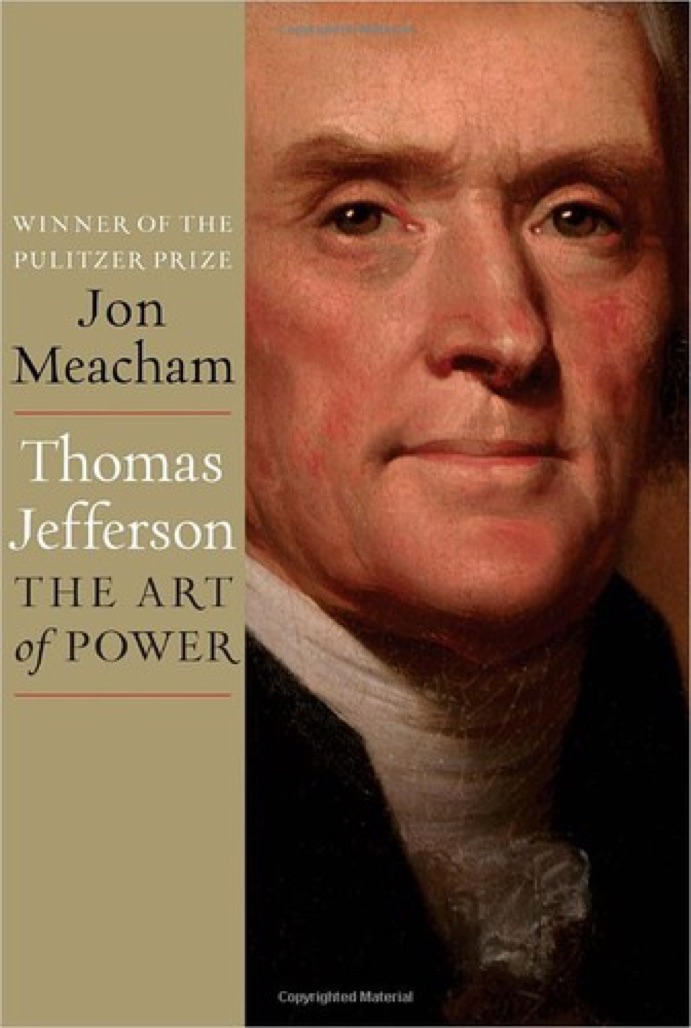
Thomas Jefferson: The Art of Power
Applying the lessons from "Thomas Jefferson: The Art of Power" by Jon Meacham to your life can be a transformative exercise in understanding the intersection of vision, pragmatism, and the complexities of human leadership. Here are some ways you might integrate these lessons:
- Master the Art of Pragmatic Leadership: - You should recognize that while having a firm set of principles is essential, the ability to adapt to changing circumstances is what defines a successful leader. Whether in the emergency department or the boardroom, you must be willing to make difficult decisions that may conflict with your initial theories if they serve the greater objective of the mission or the health of the organization.
- Cultivate Multi-Disciplinary Excellence: - Just as Jefferson was a polymath, you can enhance your effectiveness by remaining a lifelong learner across diverse fields like medicine, law, aviation, and business. This breadth of knowledge allows you to draw on unique perspectives to solve complex problems, reinforcing the idea that intellectual curiosity is a prerequisite for sustained influence and innovation.
- Leverage Communication as a Strategic Tool: - Use your voice and your writing to articulate a clear and compelling vision that inspires others to action. Jefferson’s success was largely due to his ability to frame arguments in ways that resonated with the public; you can apply this by communicating with empathy and clarity to your patients, your investment partners, and your team members.
- Embrace Political and Social Intelligence: - Understand the importance of building alliances and navigating the internal politics of any environment you inhabit. Recognizing the motivations of others and finding common ground is not a compromise of integrity, but rather a necessary skill for moving large-scale initiatives forward in complex institutional or legal settings.
- Acknowledge and Address Personal Contradictions: - Reflect on the inconsistencies between your stated values and your daily actions to ensure you are leading with authenticity. By confronting your own biases or the systemic issues within your industries, you can strive for a more integrated life that aligns with the "Stay Humble" aspect of your personal mantra despite your professional successes.
By integrating these lessons, you can become a more effective architect of your own legacy, balancing the high-altitude vision of a pilot with the ground-level reality of a physician and entrepreneur. Meacham’s portrayal of Jefferson encourages you to stay hungry for progress while remaining humble enough to respect the complexities of the human condition and the enduring challenge of leading others toward a better future.
What the book covers
"Thomas Jefferson: The Art of Power" by Jon Meacham is a comprehensive and intimate biography that examines the life of the third President of the United States through the lens of political mastery. Meacham explores how Jefferson navigated the profound complexities of power, balancing his deeply held Enlightenment ideals with the pragmatic, often messy requirements of governing a nascent nation. The book provides a detailed portrait of a man who was simultaneously a philosopher, an architect of democracy, and a master manipulator of the levers of government.
Summary:
- The Evolution of a Philosopher-Statesman: - Meacham traces Jefferson's formative years in Virginia, highlighting his insatiable appetite for knowledge and the Enlightenment values that shaped his early worldview. You see a man who was as comfortable discussing the intricacies of botany or European architecture as he was debating the nuances of law and governance, establishing an intellectual foundation that would support his future leadership roles. - This period emphasizes that his political power was rooted in a deep, lifelong commitment to understanding the world around him, suggesting that true leadership begins with a broad and rigorous education.
- The Power of Purposeful Rhetoric: - The book provides an in-depth look at the drafting of the Declaration of Independence, illustrating Jefferson’s profound belief in the power of the written word to mobilize a divided populace toward a singular goal. Meacham emphasizes that Jefferson viewed himself as an instrument of the public will, using his immense rhetorical gifts to articulate a vision of freedom that would define the American national identity.
- The Crucible of Partisan Conflict: - During his tenure as Secretary of State and his subsequent rivalry with Alexander Hamilton, Jefferson demonstrated a sophisticated and sometimes ruthless understanding of partisan politics. He learned that to achieve his vision for an agrarian democracy, he had to build a robust political machine and manage a network of loyalists, showing that even the most high-minded ideals require strategic organization and savvy management to survive.
- The Strategic Expansion of the Republic: - As President, Jefferson’s pragmatism was most evident during the negotiations for the Louisiana Purchase, where he moved beyond a strict constitutional interpretation to seize a transformative opportunity for the nation’s growth. Meacham argues that this move exemplified Jefferson’s core belief that the survival and security of the republic outweighed a rigid adherence to theoretical legal doctrine when the stakes were high.
- The Paradox of Liberty and Oppression: - Meacham does not shy away from Jefferson’s deepest contradictions, particularly his continued reliance on the institution of slavery while simultaneously championing the cause of universal human liberty. The book examines his complex relationship with Sally Hemings and his inability to reconcile his personal lifestyle and economic realities with his stated moral convictions, providing a sobering look at the limitations of even the most enlightened leaders.
- The Final Pursuit of Knowledge and Legacy: - In his retirement, Jefferson focused his remaining energy on the founding of the University of Virginia, reflecting his lifelong commitment to secular education as the essential bedrock of a functioning democracy. This period highlights his belief that a nation must constantly renew its intellectual vigor to maintain its freedom, a sentiment that resonates through his voluminous and reflective correspondence with former rivals.
"Thomas Jefferson: The Art of Power" is significant because it strips away the hagiography to reveal a leader who understood that power is an art form requiring both vision and flexibility. Meacham’s work serves as a reminder that the most impactful leaders are those who can navigate the tension between what is ideal and what is possible, ensuring that their vision survives the harsh realities of the political world.