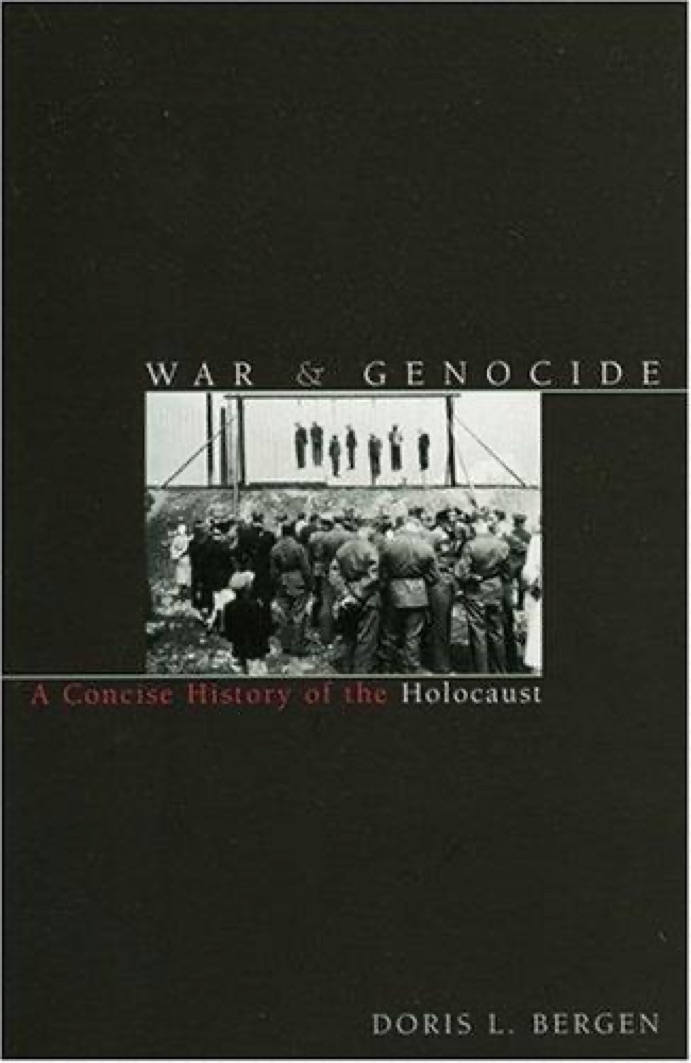
War and Genocide: A Concise History of the Holocaust
Applying the lessons from "War and Genocide: A Concise History of the Holocaust" by Doris L. Bergen to your life can be a sobering exercise in understanding the fragility of societal norms and the ethical responsibilities of leadership. Here are some ways you might integrate these lessons:
-
Vigilance Against Ethical Incrementalism: - The Holocaust did not begin with mass violence but with small, legalistic shifts in policy and the gradual erosion of civil rights. In your roles as a physician and entrepreneur, you must recognize that organizational rot and ethical compromise often happen in degrees; "staying humble" requires the courage to call out minor injustices before they become normalized.
-
The Moral Obligation of Expertise: - Many architects of the genocide were highly educated professionals—doctors, lawyers, and engineers—who used their skills to facilitate murder. This serves as a haunting reminder that technical proficiency must always be anchored by a rigid moral compass; as a pilot and attorney, you understand that procedure without ethics is a path to catastrophe.
-
Transitioning from Bystander to Upstander: - Bergen’s analysis of the "bystander" effect shows that silence is a form of complicity. In leadership and medicine, being "not guilty" is insufficient; true leadership requires active intervention. You should ensure that your ventures and teams are built on cultures where individuals feel empowered to speak up against wrongdoing.
-
Critical Assessment of Systemic Efficiency: - The Holocaust was a triumph of logistics and management used for evil. In your work as a VC and MBA, this lesson reinforces that efficiency is a neutral tool. The value of any system—whether a healthcare delivery model or a tech startup—is defined entirely by its ultimate purpose and its impact on human dignity.
-
Recognizing the Devaluation of the "Other": - The genocide was fueled by the categorization of people as "sub-human" or "burdensome." In healthcare and business, you must remain hyper-aware of biases that marginalize certain populations. Ensuring equitable access and treatment in your medical and entrepreneurial endeavors is a direct counter-action to the prejudices documented in history.
-
The Fragility of Professional Institutions: - History shows that even the most respected institutions can be co-opted by extremist ideologies. As a leader of various organizations, you have a responsibility to build resilient institutional safeguards that protect individual rights and promote ethical behavior, regardless of the political or economic climate.
By integrating these lessons, you ensure that your "Stay Hungry" drive is always balanced by a profound respect for the sanctity of human life and a commitment to preventing the marginalization of any group within the organizations you build and lead. This perspective transforms historical knowledge into a functional framework for ethical leadership and compassionate medicine.
What the book covers
"War and Genocide: A Concise History of the Holocaust" by Doris L. Bergen is a comprehensive yet accessible analysis of the Holocaust, framing the genocide as inextricably linked to the context of World War II. Bergen argues that the Nazi regime’s expansionist warfare provided both the logistical framework and the ideological cover necessary for the systematic destruction of European Jewry and other targeted groups. The book moves beyond a simple timeline, examining the interplay between ideology, traditional prejudice, and the brutalizing effects of total war to explain how such a catastrophe became possible in a modern, civilized society.
Summary:
-
The Indispensable Link Between War and Genocide: - Bergen’s central thesis posits that the Holocaust cannot be understood in isolation from World War II. She demonstrates how the chaos of war provided the necessary cover for mass murder, the territory in the East to carry it out, and the psychological conditioning that devalued human life. - The war allowed the Nazi leadership to frame genocide as a security necessity, turning soldiers and civilians into accomplices by blurring the lines between military objectives and racial purification.
-
Preconditions and the Strategy of Incrementalism: - The book explores the "step-by-step" nature of the Holocaust, beginning with the legal marginalization of Jews through the Nuremberg Laws. Bergen describes this as a tightening noose that sought to achieve "social death" before physical extermination began. - This process relied on centuries of latent European anti-Semitism and the ability of the Nazi state to co-opt existing bureaucratic structures to identify, isolate, and eventually deport victims.
-
The T4 Program as a Blueprint for Mass Murder: - Before the systematic killing of Jews began, the Nazis targeted the disabled and mentally ill through the "euthanasia" program known as T4. This program served as a technical and personnel dry run for the later death camps. - It established the precedent for using carbon monoxide gas and trained the individuals who would later manage the extermination centers in occupied Poland, proving that medical professionals could be co-opted into state-sponsored murder.
-
Operation Barbarossa and the Shift to Extermination: - The 1941 invasion of the Soviet Union marked a radicalization of Nazi policy. Mobile killing units, or Einsatzgruppen, followed the German army to conduct mass shootings of Jews, Roma, and Soviet officials. - This "Holocaust by bullets" transitioned the regime from a policy of forced emigration and ghettoization to one of total physical annihilation, as the scale of the war in the East removed previous logistical inhibitions.
-
The Industrialization of Death in the Camps: - Bergen distinguishes between the vast network of concentration camps and the specific extermination centers designed solely for killing, such as Belzec, Sobibor, and Treblinka. She details the horrific efficiency of gas chambers and crematoria used to process thousands of victims daily. - The narrative emphasizes the role of the SS and the use of Sonderkommandos—prisoners forced to assist in the disposal of bodies—to maintain the industrial machinery of the genocide while distancing the perpetrators from the reality of their actions.
-
The Diversity of Victims and the Scope of Atrocity: - While maintaining the centrality of the Jewish experience, Bergen includes the systematic persecution of Sinti and Roma, homosexuals, Jehovah’s Witnesses, and Soviet prisoners of war. She explains how Nazi racial hierarchy categorized different groups as "asocials" or "sub-humans." - By broadening the scope, the book illustrates the totalizing nature of Nazi ideology, which sought to purge any element deemed a threat to the purity or strength of the "Aryan" race.
-
Collaboration, Indifference, and the Role of Bystanders: - The Holocaust was a pan-European event that required the cooperation of local governments and the silence of ordinary citizens. Bergen examines why some chose to rescue victims while the vast majority remained indifferent or actively benefited from the plunder of Jewish property. - The book highlights the failure of the international community and religious institutions to intervene effectively, suggesting that the genocide was enabled by a global breakdown of moral and political responsibility.
"War and Genocide" is a crucial text for understanding the Holocaust not as an accidental byproduct of war, but as a deliberate, central objective of the Nazi state. By focusing on the structural and human elements of the tragedy, Bergen provides a sobering account of how modern institutions can be perverted to facilitate mass atrocity, serving as a permanent warning to future generations.