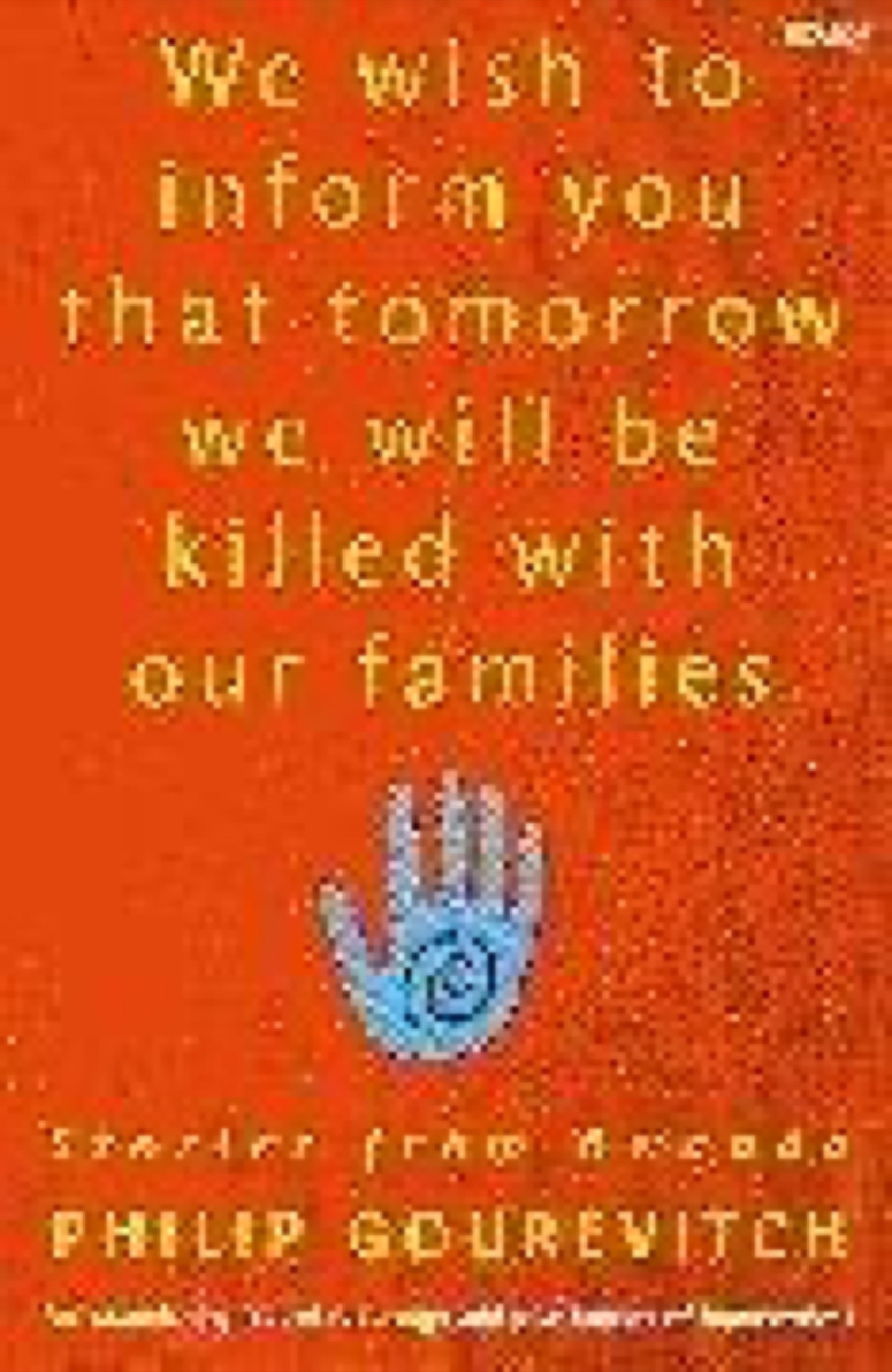
We Wish to Inform You That Tomorrow We Will Be Killed with Our Families: Stories from Rwanda
Applying the lessons from "We Wish to Inform You That Tomorrow We Will Be Killed with Our Families: Stories from Rwanda" by Philip Gourevitch to your life can be a sobering exercise in ethical leadership and systemic awareness. Here are some ways you might integrate these lessons:
-
Ethical Vigilance in Leadership: - As a leader in medicine or business, you must recognize that silence or inaction is often a choice with severe moral consequences. This book serves as a stark reminder that staying humble requires you to acknowledge when systems are failing and to have the courage to advocate for those who cannot speak for themselves, even when the institutional tide is against you.
-
Understanding Root Cause Analysis: - The book teaches you that complex crises are rarely spontaneous but are usually the result of long-festering systemic issues and historical grievances. In both legal strategy and medical diagnosis, you must look beyond the immediate symptoms to understand the underlying structures—whether they be colonial legacies or corporate culture—that drive human behavior and organizational failure.
-
The Importance of Decisive Triage: - Drawing on the parallels with emergency medicine and aviation, Gourevitch’s account highlights the danger of "analysis paralysis." You are reminded that in high-stakes environments, the failure to make a difficult decision is often more catastrophic than a flawed one; the international community's hesitation to label the events "genocide" led to a total loss of the golden hour for intervention.
-
Cultivating Radical Empathy: - In your roles as a physician and entrepreneur, it is easy to view populations through the lens of data or "cases." Gourevitch challenges you to look at the individual stories behind the statistics, reinforcing the idea that maintaining your humanity in professional settings requires a conscious effort to see the person behind the patient chart or the legal file.
-
Accountability and Legal Integrity: - The Rwandan experience underscores the vital role of the rule of law in maintaining social order. You can apply this by ensuring that your ventures are built on transparent frameworks where accountability is a functional part of the ecosystem, preventing the kind of ethical erosion that allows small injustices to scale into systemic catastrophes.
-
Resilience Through Truth-Telling: - The survival of Rwanda as a state depends on the difficult process of confronting its history. For your own growth, this highlights the necessity of "staying hungry" for the truth, even when it is painful, as genuine healing and progress only occur when you are willing to look honestly at past failures and integrate those lessons into your future path.
By integrating these lessons, you can develop a more profound sense of social responsibility and a sharper intuition for the ethical dimensions of high-stakes decision-making. Gourevitch reminds us that our common humanity is a fragile bond that requires constant, active protection from those in positions of influence and power.
What the book covers
"We Wish to Inform You That Tomorrow We Will Be Killed with Our Families: Stories from Rwanda" by Philip Gourevitch is a haunting and definitive journalistic account of the 1994 Rwandan Genocide and its complex aftermath. The book meticulously reconstructs how a state-sponsored campaign of ethnic cleansing resulted in the deaths of nearly one million Tutsis and moderate Hutus in just one hundred days. Through firsthand interviews and rigorous research, Gourevitch explores the deep-seated historical tensions, the chilling efficiency of the killers, and the catastrophic failure of the international community to intervene.
Summary:
-
The Orchestration of the Genocide: - Gourevitch details the chilling precision with which the Hutu Power movement mobilized an entire population to murder their neighbors, using radio propaganda and a network of local militias known as the Interahamwe. This was not a spontaneous eruption of tribal violence but a meticulously planned state enterprise that utilized the bureaucratic machinery of the Rwandan government to execute a "final solution."
-
Historical Roots and Colonial Division: - The book traces the ethnic divide back to Belgian colonial rule, which institutionalized the Tutsi-Hutu distinction through mandatory ID cards and preferential treatment. Gourevitch argues that the rigid ethnic categories, originally based on superficial physical characteristics and cattle ownership, were weaponized by extremist politicians to create a zero-sum game for political power and national identity.
-
International Apathy and the UN Failure: - A major theme is the catastrophic failure of the United Nations and Western powers—specifically the United States and France—to prevent the slaughter despite clear warnings. Gourevitch recounts the heartbreaking frustrations of General Roméo Dallaire, who was denied the mandate and resources to act, highlighting the moral bankruptcy of a world that watched the genocide unfold on television but chose not to intervene.
-
The Haunting Legacy of Nyarubuye: - Through the story of the Nyarubuye Roman Catholic Church, Gourevitch provides a visceral look at the physical and psychological landscape of the massacre. He visits the site where thousands were slaughtered while seeking sanctuary, describing the remains left behind as a silent testament to the unimaginable cruelty and the total breakdown of societal and religious protections.
-
Justice and the Burden of Reconciliation: - The aftermath of the genocide presented an unprecedented legal challenge: how to provide justice when hundreds of thousands of people were complicit in murder. Gourevitch examines the complexities of the Rwandan Patriotic Front’s (RPF) rise to power and the subsequent struggle to rebuild a nation while balancing the need for accountability with the necessity of coexistence between survivors and perpetrators.
-
The Regional Crisis and Refugee Camps: - The narrative extends into the Great Lakes region of Africa, detailing how the fleeing genocidaires established control over refugee camps in Zaire (now DR Congo). Gourevitch illustrates the tragic irony of international aid agencies inadvertently feeding and protecting the killers, which sowed the seeds for subsequent regional wars and decades of instability.
This book remains one of the most significant works of contemporary history because it forces readers to confront the depths of human depravity and the fragility of international law. Gourevitch’s writing serves as both a memorial to the victims and a scathing indictment of global indifference, reminding us that "never again" is a hollow promise without the political will to enforce it.