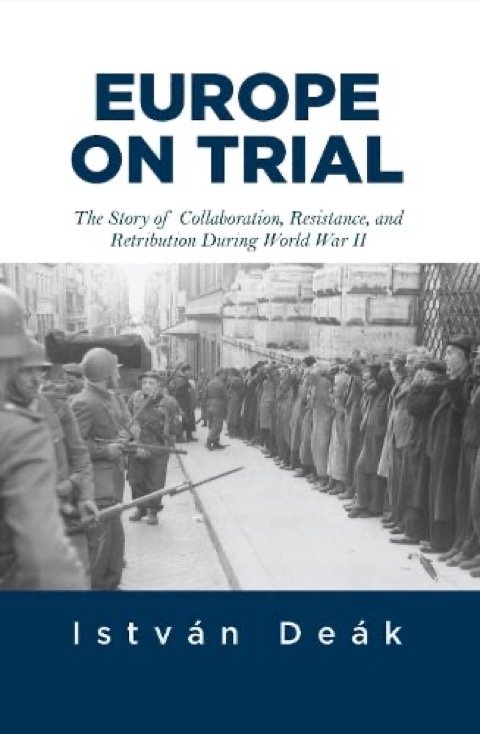
Europe on Trial: The Story of Collaboration, Resistance, and Retribution during World War II
Applying the lessons from "Europe on Trial: The Story of Collaboration, Resistance, and Retribution during World War II" by Istvan Deak to your life can be a transformative exercise in understanding the weight of ethical leadership during times of extreme crisis. Here are some ways you might integrate these lessons:
-
Navigate the Gray Zones with Integrity: - As a leader in healthcare or venture capital, you often face decisions where there is no perfect "white" or "black" answer. Deak’s analysis shows that compromise can easily slip into complicity; you must develop a robust internal moral compass to recognize when a "necessary evil" becomes simply evil, ensuring your professional pragmatism never compromises your core values.
-
Understand the Complexity of Human Motivation: - Whether managing a medical team or evaluating a startup founder, recognize that people’s actions are often driven by a complex mix of fear, survival instinct, and ambition. Avoid the trap of simplistic labeling and instead seek to understand the systemic pressures and incentives that influence human behavior within your organizations.
-
Take Responsibility for Institutional Culture: - The book illustrates how bureaucratic efficiency was weaponized for atrocity when ethical guardrails were removed. In your business ventures, ensure that your organizational structures prioritize ethics over blind adherence to process, and actively empower your employees to voice dissent or raise "red flags" without fear of retribution.
-
Resist the Temptation of Collective Denial: - Just as nations created myths to avoid facing their wartime records, leaders often ignore "sunk costs" or past failures to protect their egos. "Stay Humble" by conducting honest, transparent post-mortems of your projects, acknowledging where things went wrong rather than rewriting the narrative to favor your own success.
-
Lead with Courage Under Pressure: - The few who truly resisted the occupation did so at great personal risk. In the high-stakes fields of law, medicine, or aviation, the pressure to conform to a failing standard or ignore a safety violation can be immense; Deak’s work reminds you that true leadership requires the courage to stand apart from the crowd when the stakes are highest.
-
Seek Justice with Nuance and Empathy: - When dealing with professional "retribution"—such as terminating an employee or pursuing a legal claim—remember the lessons of the post-war trials. Ensure your actions are focused on restorative justice and future organizational health rather than purely emotional or performative punishment, acknowledging the human complexity involved.
By integrating these lessons, you move beyond a superficial understanding of history and begin to see the echoes of these moral dilemmas in every high-stakes environment you inhabit. Embracing the complexity of "Europe on Trial" allows you to lead with a deeper empathy and a more vigilant ethical stance, ensuring that your hunger for success never outpaces your commitment to human dignity and truth.
What the book covers
"Europe on Trial: The Story of Collaboration, Resistance, and Retribution during World War II" by Istvan Deak is a profound exploration of the moral ambiguities and political complexities that defined life under Nazi occupation. Deak examines how individuals, governments, and institutions across Europe navigated the impossible choices between cooperation, defiance, and survival during the continent's darkest hour. The book challenges the simplistic post-war narratives of universal resistance versus monolithic villainy, instead presenting a nuanced study of the "gray zone" where most people existed. By analyzing the legal and social aftermath of the war, Deak provides a comprehensive look at how a continent attempted to rebuild its moral foundation through retribution and reconciliation.
Summary:
-
The Spectrum of Collaboration: - Deak distinguishes between different types of collaboration, ranging from state-level strategic cooperation intended to preserve national sovereignty to individual opportunism driven by greed or fear. He explains that for many leaders, collaboration was seen as a pragmatic way to maintain some level of autonomy or to prevent even harsher Nazi direct rule over their populations.
-
The Realities of Resistance: - The book clarifies that active resistance was often a late-war phenomenon and rarely as unified or widespread as national myths later suggested. Deak highlights the internal conflicts between various resistance groups—such as communists versus nationalists—who often viewed each other with as much suspicion as they did the German occupiers.
-
Life Under Occupation and the Gray Zone: - The narrative describes the daily struggle for survival, where the line between cooperation and resistance was often blurred by the necessity of obtaining food, protection, and basic civil order. Deak explores how ordinary citizens were frequently forced into moral complicity by the sheer weight of totalitarian administrative control and the threat of collective punishment.
-
The Holocaust and Local Participation: - A critical focus is placed on the role of local police forces, civil servants, and bureaucracies in the deportation and murder of Jews. Deak argues that the machinery of the Holocaust relied heavily on the efficiency and cooperation of non-German officials, many of whom participated out of duty, careerism, or local prejudice rather than direct Nazi orders.
-
Post-War Retribution and the Purges: - The book details the "épuration" or cleansing processes that followed liberation, which ranged from extrajudicial "street justice" and public humiliations to formal court trials. Deak reveals the immense difficulty of defining and prosecuting "treason" in a continent where the legal and political structures had been completely shattered and then rebuilt under occupation.
-
The Legal Paradoxes of Post-War Justice: - Deak examines the complexities of the Nuremberg trials and national courts, where defendants frequently argued they were merely following the valid laws of their respective states. This section highlights the inherent tension between international moral standards and the sovereign laws that existed during the occupation years.
-
Memory and National Myth-Making: - Finally, the author discusses how European nations constructed their post-war identities by emphasizing heroic resistance while downplaying or erasing the history of collaboration. This "collective amnesia" served a functional purpose in unifying traumatized populations but often buried the difficult ethical truths of how societies actually functioned under the Swastika.
Deak’s work serves as a sobering reminder that morality is often the first casualty of total war and systemic collapse. By documenting the harrowing choices faced by Europeans from 1939 to 1945, he provides an essential framework for understanding how societies recover from deep ethical fractures and the enduring difficulty of achieving true justice in the wake of mass complicity.