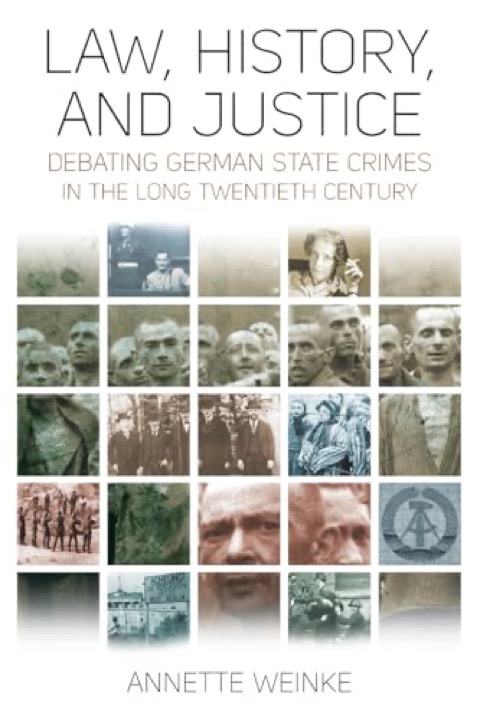
Law, History, and Justice: Debating German State Crimes in the Long Twentieth Century
Applying the lessons from "Law, History, and Justice: Debating German State Crimes in the Long Twentieth Century" by Annette Weinke to your life can be a profound exercise in understanding institutional integrity and the weight of personal accountability. Here are some ways you might integrate these lessons:
-
The Ethics of Systems: - As a leader in healthcare or business, you must recognize that organizations can develop "pathological" cultures where unethical behavior becomes normalized. You should regularly audit your company’s "moral infrastructure" to ensure that the pursuit of efficiency or profit never overrides the fundamental human rights of your patients, employees, or stakeholders.
-
Confronting Institutional Inertia: - Weinke’s account of the 1950s judicial silence serves as a warning against the comfort of the status quo. In your roles as a pilot or physician, where checklists and protocols are vital, you must remain vigilant against "normalization of deviance," where small ethical or safety shortcuts eventually become the standard of care.
-
The Lawyer’s Moral Burden: - For those with legal training, this book emphasizes that law is not merely a technical craft but a moral instrument. You should approach your legal and board-room decisions with the understanding that "legal" does not always mean "just," and that a true professional has the duty to challenge laws or policies that protect the powerful at the expense of the truth.
-
Courageous Leadership in "Triage": - Just as Fritz Bauer forced a nation to look at its wounds, you must have the courage to perform "organizational triage" on past failures. Whether a failed venture or a medical error, don't bury the history; use it as a data-driven autopsy to improve future outcomes and build a culture of radical honesty.
-
The Multi-Disciplinary Perspective: - Weinke shows that law needs history to provide context, and history needs law to provide accountability. In your pursuit of lifelong learning (MBA, Law, Medicine), integrate these disparate fields to solve complex problems. Don't look at a business crisis through a single lens; examine its historical roots, its legal implications, and its human impact.
-
Building a Legacy of Accountability: - Take the lesson that "staying humble" means being willing to admit when your "state" (your company or your team) has erred. By creating mechanisms for feedback and accountability now, you ensure that your legacy is built on a foundation of integrity rather than a convenient but fragile silence.
By integrating these lessons, you will refine your ability to lead with a high degree of situational awareness and moral clarity. Embracing the difficult work of historical and personal accountability ensures that your ventures are not only successful but are also contributors to a more just and transparent society.
What the book covers
"Law, History, and Justice: Debating German State Crimes in the Long Twentieth Century" by Annette Weinke is a scholarly and comprehensive examination of how Germany’s legal system and historical consciousness evolved in response to the state-sponsored atrocities of the Nazi era and, later, the GDR. Weinke explores the complex interplay between legal proceedings, political necessity, and the academic writing of history, showing how these disciplines often clashed or collaborated to forge a national identity. The book serves as a critical analysis of transitional justice, tracing the trajectory from the Nuremberg Trials to the post-unification debates of the 1990s.
Summary:
-
The Legacy of Nuremberg and International Intervention: - Weinke begins by analyzing the immediate post-war period, where the Nuremberg Trials established the precedent for holding individuals accountable for state crimes. She argues that while these trials were initiated by the Allied powers, they set a permanent, albeit controversial, framework for how German jurists would view international law and the "crimes against humanity" category for decades to come. - The author highlights the early tension between "victor’s justice" and the internal German need for a legal framework that could address the unprecedented nature of the Holocaust without appearing solely as an instrument of foreign occupation.
-
The Era of Judicial Reticence and the Cold War: - During the 1950s, both East and West Germany experienced a period of legal stagnation regarding Nazi crimes. In the West, many former Nazi officials remained in the judiciary, leading to a culture of silence and a narrow interpretation of criminal law that favored the perpetrators under the guise of legal continuity. - Weinke illustrates how the Cold War influenced these legal proceedings, as both German states used the prosecution (or lack thereof) of Nazi criminals as a propaganda tool to delegitimize each other, often prioritizing political positioning over genuine restorative justice.
-
The 1960s Paradigm Shift and the Auschwitz Trials: - The book identifies the Frankfurt Auschwitz Trials (1963–1965) as a turning point where the West German legal system finally confronted the systemic nature of the concentration camps. Weinke explains how Attorney General Fritz Bauer used these trials to educate the public, moving beyond simple individual guilt to expose the entire machinery of the state. - This period marked a fusion of history and law, as historians were called as expert witnesses for the first time, establishing a methodology where legal evidence helped shape the official historical narrative of the Third Reich.
-
Historiography and the Legal Process: - A central theme is the role of the contemporary historian in the courtroom. Weinke explores how the requirements of criminal law—which focus on individual intent and specific actions—often conflicted with the historian’s goal of explaining broad social and structural causes of the Nazi regime’s success. - This friction led to a unique "legalized history" in Germany, where the courtrooms became the primary venues for debating the country’s past, often overshadowing academic discourse and influencing how future generations perceived their national heritage.
-
The Second Dictatorship and Post-Unification Justice: - Following the fall of the Berlin Wall, Germany faced the challenge of addressing the "second dictatorship" of the GDR. Weinke compares the legal strategies used for SED officials with those used for Nazi perpetrators, noting the evolution of legal theories regarding "desk murderers" and state-mandated violence. - She argues that the post-1989 trials were informed by the failures and successes of the previous decades, leading to a more sophisticated, though still deeply divisive, attempt to provide justice for victims of the East German border regime and the Stasi.
-
Global Impact of the German Model: - In the concluding sections, Weinke reflects on how Germany’s long-term engagement with its criminal past has influenced the modern international criminal justice system. The "German model" of coming to terms with the past (Vergangenheitsbewältigung) has become a global reference point for other nations transitioning from authoritarianism to democracy.
By documenting the long twentieth century’s legal battles, Weinke demonstrates that justice is not a static event but a continuous, iterative process. The book underscores the vital necessity of institutional transparency and the courageous role of individuals who challenge systemic silence to uphold the rule of law.