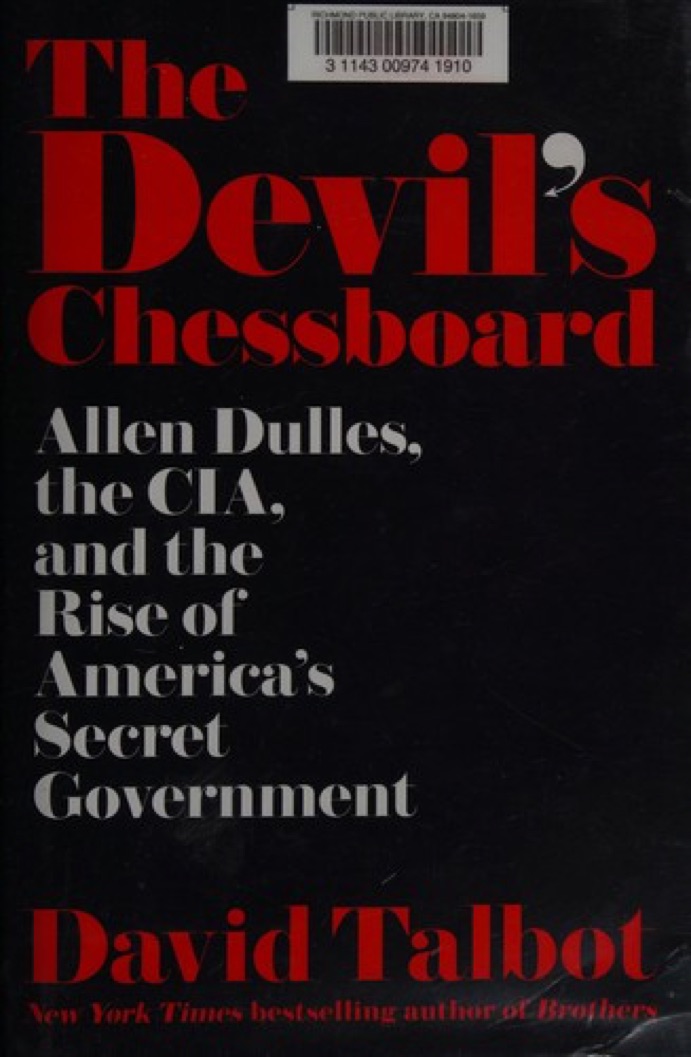
The Devil's Chessboard: Allen Dulles, the CIA, and the Rise of America's Secret Government
Applying the lessons from "The Devil's Chessboard" by David Talbot to your life can be an exercise in developing a heightened sense of institutional skepticism and ethical vigilance. Here are some ways you might integrate these lessons:
- Scrutinize the "Official" Narrative: - In medicine and law, you are often presented with standardized protocols or established precedents that may be influenced by hidden interests or institutional inertia. You must cultivate the habit of looking beneath the surface of "official" reports to find the underlying data and motivations, ensuring your decisions are based on objective truth rather than curated information.
- Identify the "Shadow" Infrastructure in Organizations: - Whether in a hospital system or a startup, there is often an informal power structure that operates alongside the official org chart. You should learn to map these hidden networks—who holds the real influence, who controls the flow of information, and whose interests are truly being served—to navigate complex institutional landscapes more effectively.
- Maintain Ethical Boundaries Under Pressure: - Dulles justified his actions through the lens of a "greater good" that ultimately served narrow interests. As a leader and entrepreneur, you must establish unshakeable ethical red lines; if a strategy requires the compromise of your core values or the truth, it is a sign of a failing system rather than a necessary trade-off for success.
- Understand the Persistence of Institutional Culture: - Lessons from the CIA’s history show that an organization’s culture can outlive its founders and resist even the most powerful reformers. When you are leading a turnaround or acquiring a company, you must address the deeply embedded cultural DNA rather than just changing the leadership at the top, or the old "secret" habits will inevitably resurface.
- Vigilance Against Intellectual Capture: - Just as the media was influenced by the "Mighty Wurlitzer," professional experts can be captured by industry funding or groupthink. You must maintain your intellectual independence by diversifying your information sources and inviting dissent from outside your immediate professional circle to avoid becoming an unwitting agent of a biased agenda.
- The Cost of Compartmentalization: - Dulles thrived on secrecy and the "need to know" basis, which eventually led to catastrophic failures like the Bay of Pigs. In aviation and emergency medicine, transparency and open communication are life-saving; you should strive to eliminate unnecessary silos in your ventures, recognizing that secrets are often the breeding ground for systemic rot.
By integrating these lessons, you become a more discerning leader who recognizes that true power requires accountability, and that the most dangerous threats to an organization—or a country—often come from those who believe they are above the rules in the name of security or profit.
What the book covers
"The Devil's Chessboard: Allen Dulles, the CIA, and the Rise of America's Secret Government" by David Talbot is a searing and meticulously researched revisionist history of the formative years of the American national security state. The book focuses on Allen Dulles, the longest-serving director of the CIA, tracing his transition from a high-powered corporate lawyer to a global puppet master who operated largely outside the bounds of democratic oversight. Talbot argues that Dulles played a pivotal role in establishing a "deep state" that prioritized the interests of Wall Street and the military-industrial complex over the constitutional mandates of the executive branch.
Summary:
- The Wall Street Origins of Power: - Before leading the CIA, Allen Dulles and his brother John Foster Dulles were partners at Sullivan & Cromwell, where they represented international corporations and maintained disturbing ties to Nazi-affiliated financiers. This period established the Dulles philosophy that American corporate interests were synonymous with national security, providing the template for a career defined by the protection of elite capital through clandestine means.
- The Birth of the Secret Government: - During and after World War II, Dulles utilized his position in the OSS to build an independent intelligence network that often operated at cross-purposes with official U.S. policy. He was instrumental in Operation Paperclip, which smuggled Nazi scientists and intelligence officers into the United States, and he orchestrated the subversion of Italian elections, signaling the agency's shift from intelligence gathering to active political sabotage.
- Global Coups and Cold War Manipulation: - As CIA Director, Dulles oversaw the overthrow of democratically elected leaders in Iran (1953) and Guatemala (1954) to protect Western commercial interests. These operations cemented the CIA's role as an instrument of regime change, utilizing psychological warfare, bribery, and state-sponsored violence to reshape the geopolitical landscape without the knowledge or consent of the American public.
- MKUltra and Domestic Control: - Talbot details the darker fringes of Dulles's tenure, including the MKUltra program, which involved illegal human experimentation with mind-control drugs like LSD. This era also saw the cultivation of the "Mighty Wurlitzer," a massive propaganda network that manipulated domestic media outlets to ensure that the CIA's narrative remained the dominant version of reality for the American populace.
- The Collision with the Kennedy Presidency: - The book highlights the escalating tension between Dulles and President John F. Kennedy, particularly after the disastrous Bay of Pigs invasion. Kennedy’s subsequent firing of Dulles and his expressed desire to "splinter the CIA into a thousand pieces" created a terminal rift between the young president and the entrenched intelligence establishment that Dulles had built and continued to influence from the shadows.
- The Assassination and the Warren Commission: - Talbot presents a controversial analysis of the JFK assassination, suggesting that Dulles, despite being officially retired, remained a central figure in the intelligence community's response to Kennedy's policies. The narrative emphasizes Dulles’s appointment to the Warren Commission, where he arguably acted as the primary architect of the official narrative, steering the investigation away from any evidence of intelligence agency involvement.
This work serves as a sobering reminder of the fragility of democratic institutions when faced with unaccountable power. By focusing on the biography of one man, Talbot exposes the structural evolution of a secret government that operates beyond the reach of the law, forever altering the trajectory of American foreign and domestic policy during the 20th century.