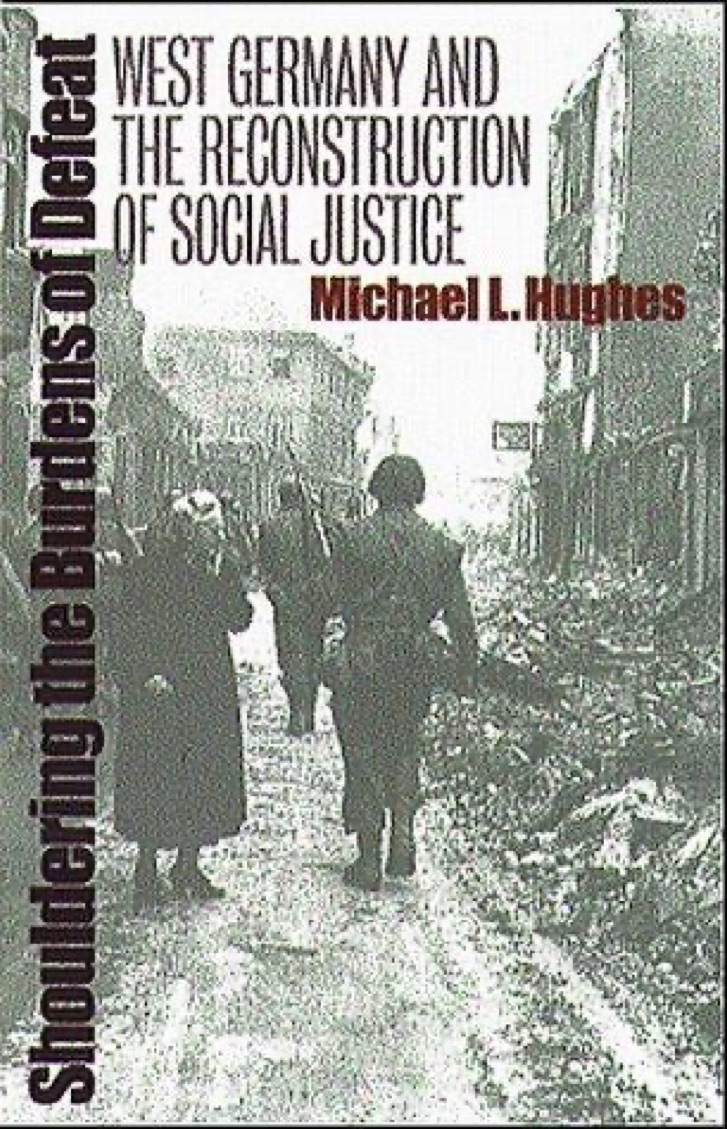
Shouldering the Burdens of Defeat: West Germany and the Reconstruction of Social Justice
Applying the lessons from "Shouldering the Burdens of Defeat" by Michael L. Hughes to your life can be a powerful exercise in understanding how to rebuild systems and maintain social contracts during times of extreme disruption. Here are some ways you might integrate these lessons:
-
Leading Through Shared Sacrifice: - In your roles as a healthcare founder or VC leader, you will inevitably face crises where resources are scarce. Hughes’ analysis reminds you that long-term stability often requires those who have "retained their assets" to contribute to the recovery of the collective, ensuring that the culture of the organization remains intact even after a significant blow or pivot.
-
Navigating the "Lottery of Survival" in Business: - Success in entrepreneurship and medicine often involves elements of luck and timing. You should recognize when your successes are a result of being on the right side of a "market lottery" and use that awareness to stay humble and support those within your ecosystem who may have been equally talented but less fortunate in their timing.
-
Pragmatism Over Perfection in Law and Leadership: - The West German government did not find a "perfect" solution to social justice, but they found a functional one that prevented collapse. When you are managing complex legal or business disputes, you should aim for the "Lastenausgleich" approach: a pragmatic, structured compromise that allows all parties to move forward without feeling entirely disenfranchised.
-
Managing the Politics of Grievance: - Whether dealing with medical staff under pressure or disgruntled shareholders, you must acknowledge the validity of their perceived losses. By creating transparent frameworks for compensation or recognition—much like the assessment of war losses—you can neutralize resentment and pivot the energy toward future growth.
-
Building Redundancy into the Social Contract: - As a pilot, you understand the importance of redundancy and safety nets. This book teaches you to apply that same logic to your ventures; the social contract of your business or medical practice is your primary safety net. You must invest in it during the "good times" so that it holds together during the lean years.
-
The Duty of the Successful to the System: - Hughes highlights that the wealthy contributed to the poor not just out of kindness, but to save the state that protected their remaining wealth. You should view your mentorship and venture investments as a similar duty—strengthening the entrepreneurial ecosystem that ultimately protects and fosters your own long-term success.
By integrating these lessons, you can refine your approach to leadership by focusing on the invisible bonds that hold a community or organization together. The history of West German reconstruction proves that when a leader prioritizes shared resilience over individual accumulation, they create an environment where everyone has a stake in the eventual "miracle" of recovery.
What the book covers
"Shouldering the Burdens of Defeat: West Germany and the Reconstruction of Social Justice" by Michael L. Hughes is a meticulous historical analysis of how a devastated nation navigated the moral and economic quagmire of post-World War II reconstruction. The book focuses on the "Equalization of Burdens" (Lastenausgleich), a massive social engineering project designed to redistribute wealth from those who retained property during the war to those who lost everything. Hughes explores the intersection of political stability, social justice, and the delicate creation of a new national identity amidst the ruins of the Third Reich.
Summary:
-
The Post-War Crisis of Inequality: - Following the collapse of 1945, West Germany faced a unique internal crisis where some citizens had lost all material possessions due to bombing or expulsion, while others emerged with their homes and businesses intact. Hughes describes this "lottery of survival" as a fundamental threat to social cohesion, creating a deep-seated resentment that threatened to derail the formation of a new democratic state.
-
The Concept of Social Justice: - The book examines how the definition of "justice" was weaponized and debated by different social strata. Hughes highlights the tension between the "right to property" held by the fortunate and the "right to a livelihood" claimed by the victims, illustrating how the West German government had to philosophically redefine justice to include a mandatory sharing of national sacrifice.
-
The Lastenausgleich (Equalization of Burdens) Law: - A central pillar of the narrative is the 1952 legislation which imposed a fifty-percent tax on all property that had survived the war, to be paid over thirty years. Hughes details the administrative complexity of this task and its role as a monumental transfer of wealth aimed at integrating millions of refugees and expellees into the West German economy.
-
The Politics of Victimhood: - Hughes analyzes the various interest groups, such as the League of Expellees, which competed for the status of the "most aggrieved." These groups pressured the fledgling government of Konrad Adenauer, forcing the state to balance the demands of powerful lobbying blocs with the overarching need for fiscal responsibility and national stability.
-
Economic Pragmatism vs. Moral Imperative: - The book argues that the reconstruction was not merely an act of altruism but a pragmatic necessity to prevent the radicalization of the displaced. Hughes demonstrates how the "Economic Miracle" (Wirtschaftswunder) was actually built on the foundation of this social peace, which was purchased through the systematic redistribution of capital.
-
The Role of the State and Bureaucracy: - Hughes sheds light on the massive bureaucratic machinery required to assess losses and distribute funds. This process helped legitimize the new West German state in the eyes of its citizens, as the government proved it could manage complex social grievances through law and order rather than through the ideological violence of the past.
-
Long-Term Social Integration: - The final chapters explore the lasting impact of these policies on German society. While the program did not achieve perfect equality, Hughes argues it succeeded in the much more important task of preventing a repeat of the social fragmentation that had destroyed the Weimar Republic, thereby securing the future of German democracy.
By examining the specific mechanisms of West German reconstruction, Hughes provides a profound look at how societies can recover from total collapse. The book serves as a testament to the power of structured, legalistic solutions in resolving deep-seated social conflicts and the necessity of shared sacrifice in the pursuit of national resilience.